
nScrypt News
In the late 1990s, a bold vision emerged from the depths of U. S. Defense Advanced Research Projects Agency (DARPA): the possibility of printing fully functional electronic circuits directly onto unconventional, non-flat surfaces like paper and curved substrates. This seemingly futuristic concept formed the framework of the Mesoscopic Integrated Conformal Electronics (MICE) program and planted the seeds for what we now call additive manufacturing. Kenneth Church, Ph. D. , CEO of nScrypt, was one of the pioneers driven by this vision. Today, his company, nScrypt, is revolutionizing electronics manufacturing, merging additive processes with digital intelligence to produce aerospace-grade systems using their distinctive “Factory in a Tool” platform.
This article explores additive manufacturing expert insights from Kenneth Church and nScrypt, tracing their journey from DARPA’s experimental program to cutting-edge aerospace, defense, and AI technology applications. We will unpack the technology’s evolution, breakthrough applications, and the transformative potential of 3D heterogeneous integration for the future of electronics manufacturing.
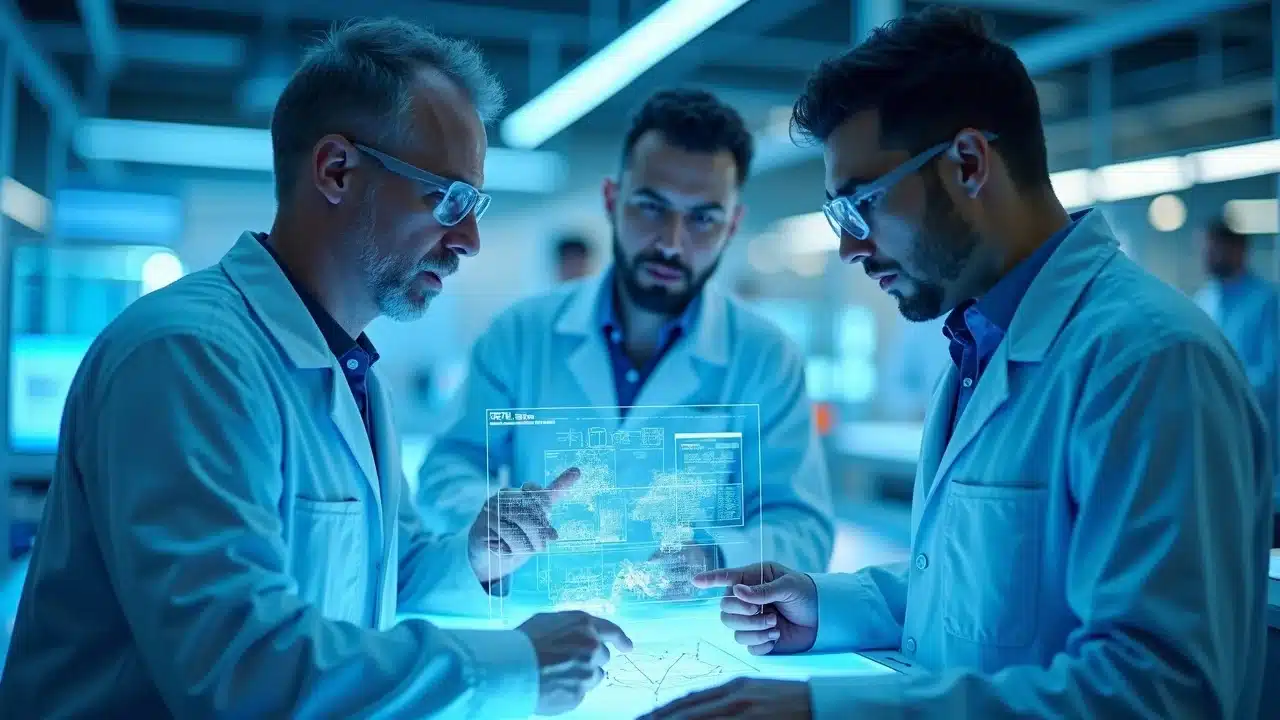
Advances in Additive Manufacturing: Setting the Stage
The concept of additive manufacturing—building products layer by layer to achieve complex, lightweight, and high-performance components—has dramatically matured over the past decades. Originally celebrated for its role in rapid prototyping, the technology now addresses critical industrial needs, including reducing lead times, enabling digital flexibility, and enhancing supply chain resilience. These advantages become especially impactful in demanding aerospace and defense sectors.
One of the most profound leaps in recent years is the integration of additive electronics manufacturing (AME) alongside traditional methods. As Kenneth Church, Ph. D. , of nScrypt articulates, “You don’t have to be the fastest step in the production line—you just can’t be the slowest. ” This pragmatic insight reflects how AME is advancing not by raw speed alone but by complementing and optimizing entire manufacturing workflows.
Understanding these developments requires appreciating both the depth and breadth of additive manufacturing technologies—spanning conductive inks, micro-dispensing, and printed sensors to complete digitally manufactured electronic systems. This article provides practical examples and expert insights illuminating the transformational role of additive manufacturing expert insights in today’s high-tech industries.
Origins and Vision: How nScrypt Pioneered Additive Manufacturing
Kenneth Church, of nScrypt, explains, “DARPA likes to shape the future and is typically a couple of decades ahead of the state of the art. . . The harder question isn’t if they will come, but when, and for what application. ”
The roots of nScrypt’s pioneering efforts trace directly back to the DARPA MICE program of the late 1990s. This program’s ambitious objective was to achieve what was then groundbreaking: printing 10-micron conductive lines and manufacturing electronic components such as resistors, capacitors, inductors, antennas, and even batteries on substrates that were unconventional, flexible, and temperature-sensitive.
At the time, “Direct Write” was the defining phrase for this emerging technology—emphasizing the direct deposition of electronic materials without masks or etching. The challenge was immense: how to create functioning electronics not just on flat boards but on curved or flexible surfaces—a capability with vast implications for aerospace and wearable electronics.
However, as Mr. Church pointed out, technology alone does not guarantee adoption. “Your technology may be super cool, but if it doesn’t solve a problem, shorten a timeline, add capability, reduce size, or lower cost—then the answer is usually no thanks. ” This understanding drove nScrypt’s evolution from “Direct Write” to the more market-friendly term “Direct Print,” which better conveyed speed and value to customers. Over time, the company also tackled speed challenges—aiming to align process throughput with production line demands.
From Direct Write to Direct Print: Enhancing Speed and Market Appeal

The transition from Direct Write to Direct Print was more than just semantics; it represented a strategic repositioning to align technology with real-world manufacturing expectations. While early additive electronics printing was often perceived as slow, this shift softened resistance and opened conversations with new markets.
To address speed constraints, nScrypt explored multiple approaches, including increasing printing velocity and exploring parallelization to achieve speeds thousands of times faster. Church analogizes this challenge with a survival metaphor: “You don’t have to outrun the bear—you just have to outrun some of the people around you. ” In manufacturing, staying ahead of slower production steps is sufficient to ensure viability.
The focus on speed, cost, and adaptability soon merged into a broader vision: building a fully digital manufacturing platform that could produce entire electronic systems digitally and flexibly. This vision sets the stage for the next revolutionary phase in additive manufacturing.
Additive Manufacturing in Aerospace and Advanced Technologies
Kenneth Church highlights, “The Factory in a Tool concept goes beyond printing. . . it is a sensorized manufacturing system that collects and processes data while the product is being built. ”
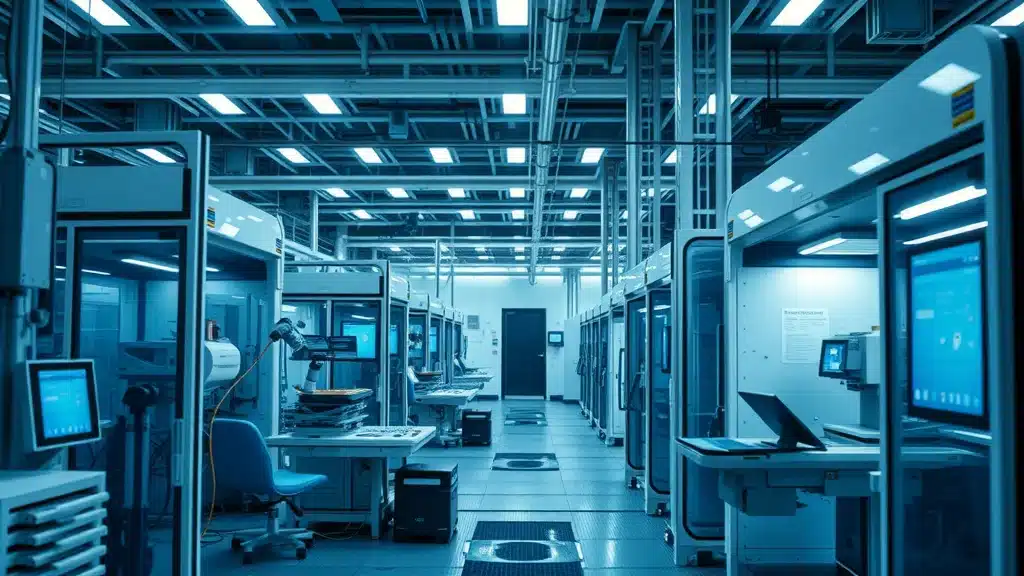
The “Factory in a Tool” coined by nScrypt embodies the integration of additive printing, placing, milling, and real-time inspection into a cohesive and sensorized manufacturing ecosystem. This approach enables unprecedented control and data collection, enhancing quality and predictability in producing critical aerospace and defense electronics.
Unlike traditional additive manufacturing tools that focus mainly on shape creation, nScrypt’s platform couples manufacturing with digital quality systems. Sensor data collected during production ensures components meet stringent performance standards and can predict their operational behavior. This capability is vital in aerospace applications, where reliability under extreme thermal, vibrational, and mechanical conditions is non-negotiable.
Moreover, the data-driven process is fully transferable to factory-scale production lines, enabling seamless scaling from prototypes to high-volume manufacturing while maintaining all digital advantages. This evolution marks a critical turning point in the additive manufacturing industry, setting a new standard for the production of high-end electronics.
Additive and Subtractive Manufacturing: Complementary Technologies
An important perspective emphasized by Church is that additive manufacturing does not replace subtractive methods (such as CNC machining); rather, they complement each other. Combining additive and subtractive manufacturing approaches offers designers and engineers higher flexibility, material efficiency, and improved surface finishes.
This hybrid approach enables producing complex geometries with superior mechanical properties while maintaining tight tolerances and optimal surface quality, essential for aerospace components where performance and durability are paramount. The synergy accelerates lead times, reduces waste, and opens new possibilities for lightweight, high-performance designs.
Breakthrough Applications and Unexpected Innovations
Kenneth Church shares, “What surprised me the most is where the technology has ended up. . . If you can make anything electrically functional or smart, the scale of opportunity becomes very large. ”
While the initial focus was on intricate, small-scale 3D electronics, nScrypt’s additive manufacturing expert insights reveal exciting applications extending to very large structures—imagine aircraft fuselage panels or missile casings embedded with smart electronics. This capability radically transforms how engineers approach design, functionality, and system intelligence.
Lightweight components produced through additive manufacturing reduce aircraft weight, enhancing fuel efficiency and performance. The ability to embed sensors, antennas, and power elements into these components leads to multifunctional parts that combine structural and electronic roles.
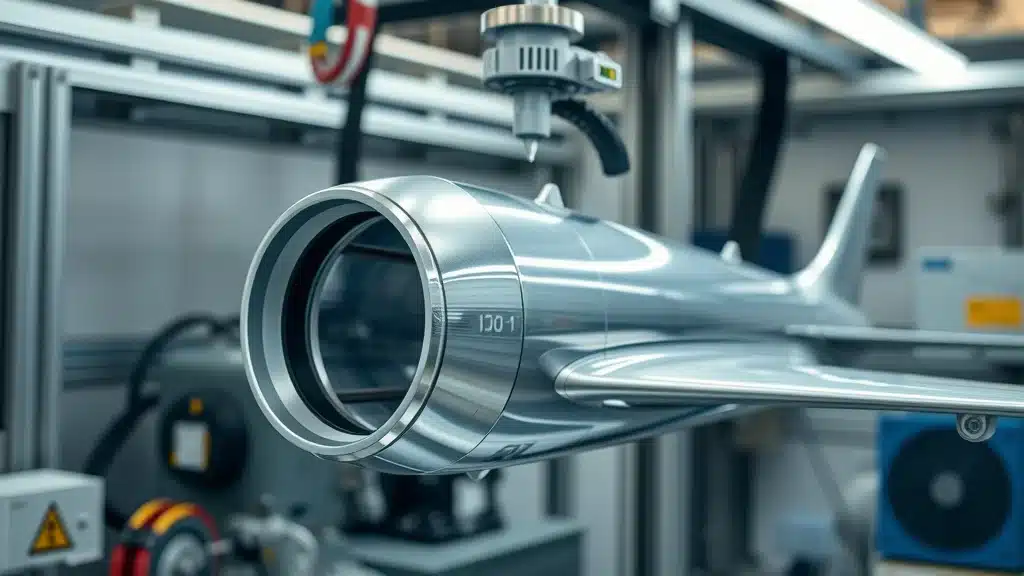
These breakthroughs underscore how digitized, scalable additive electronics manufacturing is redefining the boundaries of aerospace and high-performance equipment. It also highlights the importance of continuous innovation and openness to unexpected applications, as competitive advantage often resides in exploring untapped design space.
The Future of Additive Manufacturing: 3D Heterogeneous Integration (3DHI)
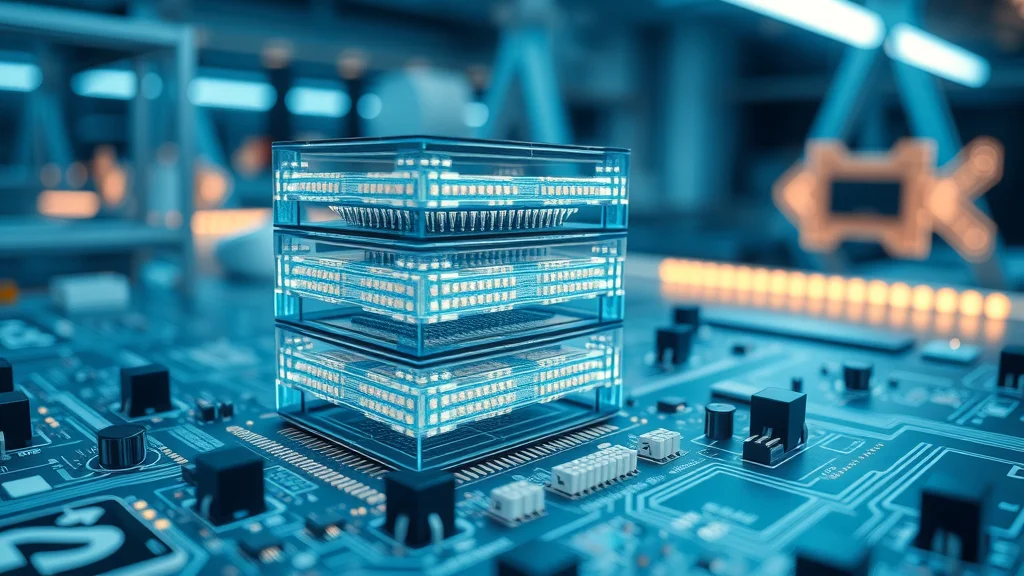
Kenneth Church notes, “True additive approaches will enable new stacking architectures, new cooling approaches, and smaller, more efficient form factors. ”
A critical frontier in additive manufacturing expert insights is 3D Heterogeneous Integration (3DHI). While much of today’s electronics production revolves around 2D or 2. 5D integration—layering components in essentially flat planes—the next revolution involves fully exploiting the third dimension, stacking and integrating components vertically with additive methods.
This shift responds to urgent demands from AI hardware, where cooling, power consumption, and form factor constraints limit performance. True 3D integration through additive manufacturing promises architectures with enhanced thermal management, reduced power losses, and significantly higher component density. Such advances could reshape computing, communications, and sensing technologies in coming decades.
Overcoming Industry Challenges: From Prototype to Scalable Production
Quality Systems and Digital Feedback in Additive Manufacturing
Transitioning from prototype to scalable production remains a major challenge for additive manufacturing. According to Kenneth Church, success depends on embedding robust quality systems and real-time digital feedback within the manufacturing process. This enables consistent results, reduces defects, and builds confidence among industrial users.
The factory of the future is sensorized and intelligent, continuously monitoring production parameters and providing actionable data to operators. Such closed-loop control helps optimize material use, reduce production costs, and speed up the certification of additive-manufactured parts, especially in critical sectors like aerospace and medical devices.
Expert Advice for Innovators: Turning Ideas into Reality
Kenneth Church advises, “The company that imagines an extra dimension improving their product has entered the race. The company that figures out how to build in that dimension moves into the lead. ”
For engineers and innovators, Church’s advice is clear: ideas alone are not enough. The differentiator is the ability to translate these ideas rapidly into scalable, manufacturable parts. Additive manufacturing makes this possible by collapsing the gap between prototype and production.
Embracing digital flexibility, focusing on integration, and constantly iterating the build process can place companies at the forefront of this fast-evolving field. APEX Expo represents a perfect platform for such innovators to connect, learn, and accelerate their adoption of advanced manufacturing technologies.
Summary:
-
The evolution and impact of additive manufacturing expert insights from nScrypt
-
How digital flexibility is transforming aerospace and advanced technology industries
-
The significance of 3D heterogeneous integration for future electronics
-
Strategies to overcome challenges in scaling additive manufacturing
-
Practical advice for innovators to turn ideas into scalable solutions
Additive Manufacturing Types Overview
|
Additive Manufacturing Type |
Description |
Typical Applications |
|---|---|---|
|
Material Extrusion |
Layer-by-layer deposition of material |
Prototyping, tooling |
|
Vat Photopolymerization |
Curing resin with light |
Dental, jewelry |
|
Binder Jetting |
Binding powder with liquid adhesive |
Metal parts, sand casting |
|
Material Jetting |
Jetting droplets of material |
High-detail models |
|
Powder Bed Fusion |
Fusing powder with laser or electron beam |
Aerospace, medical implants |
|
Sheet Lamination |
Bonding sheets of material |
Rapid prototyping |
|
Directed Energy Deposition |
Depositing and fusing material simultaneously |
Repair, large parts |
Key Takeaways
-
Additive manufacturing expert insights reveal a shift from prototyping to scalable production.
-
Digital flexibility and sensorized systems are critical for quality and adaptability.
-
3D heterogeneous integration will revolutionize electronics design and performance.
-
Combining additive and subtractive methods enhances manufacturing capabilities.
-
Innovators must focus on rapid building and scaling to lead in the industry.
To lead the future of manufacturing, companies must harness digital manufacturing ecosystems like nScrypt’s “Factory in a Tool,” embrace 3D heterogeneous integration, and accelerate from innovative prototypes to scalable production — turning visionary ideas into competitive realities.
Innovators attending the APEX Expo should seize the moment to connect with industry leaders, explore the latest additive manufacturing technologies, and position their companies at the forefront of this transformative revolution. The future of electronics manufacturing is additive and digital—don’t be left behind.