
Ohmega Ticer™ News
Modern electronics design faces relentless pressure to become smaller, faster, and more reliable. As devices operate at increasingly higher frequencies and shrink to compact form factors, traditional circuit design elements—particularly discrete resistors—pose hidden challenges that can degrade performance and limit innovation. Ohmega Ticer™ is transforming this landscape by embedding resistive materials directly into printed circuit boards (PCBs), enabling engineers to overcome these persistent constraints.
John Andresakis, Director of Business Development at Ohmega Ticer™, shares his expert insights on how embedded resistive materials are not only enhancing high-frequency performance but also driving miniaturization and greater reliability in mission-critical electronics. This article explores the critical role of embedded resistors in modern PCB design, the engineering challenges they solve, and the future direction of this cutting-edge technology.
Facts About Embedded Resistive Materials in Modern PCB Design
Traditional PCB resistors rely on discrete surface-mount devices that introduce parasitic elements adversely affecting signal integrity, especially in high-frequency applications. John Andresakis emphasizes, “even with the best chip resistors, the need for vias and solder joints causes too much parasitic inductance. ” This parasitic inductance can severely limit the performance of circuits operating in RF, microwave, and other extreme frequency ranges.
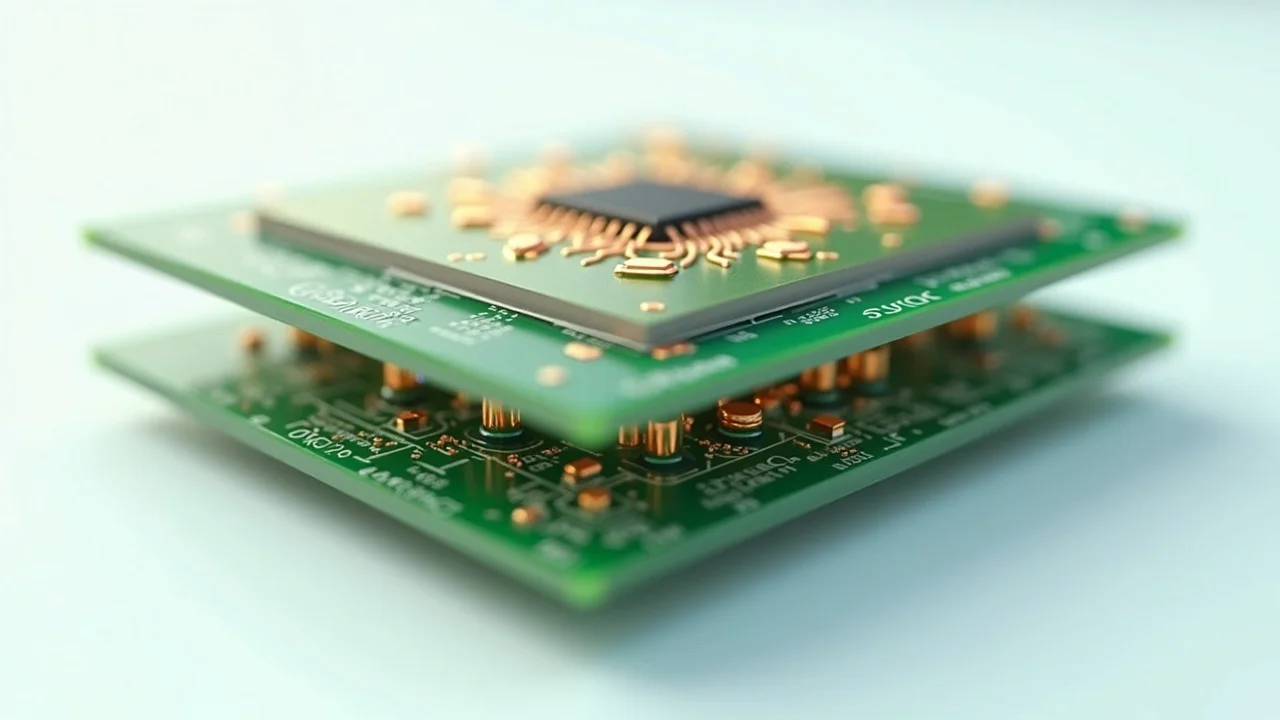
Embedded resistive materials provide a profound solution by integrating resistor functionality inline with the signal traces within the PCB substrate itself. This integration eliminates vias and solder joints associated with surface-mount resistors, significantly reducing parasitic inductance. Additionally, since embedded resistors occupy the internal layers of the PCB rather than surface space, they help maximize board real estate, a premium commodity in compact, multifunctional electronic designs.
According to John Andresakis, “every square millimeter of a PCB or package is critical as we try to put more and more functionality in smaller devices. ” Embedded resistive materials thus unlock new possibilities for engineers, enabling smaller, more efficient, and more reliable devices that meet the demands of contemporary electronics.
For engineers seeking a deeper technical dive into the practical implementation of embedded resistive materials, including design, analysis, and validation up to 60 GHz, the white paper on incorporating resistive foil RF attenuators and equalizers within PCBs offers valuable experimental insights and advanced methodologies.

Understanding Embedded Resistive Materials: Definitions and Key Concepts
What Is an Embedded Resistor?
An embedded resistor is a resistive element manufactured within the layers of a multilayer PCB rather than being attached to the surface as a discrete component. This embedded resistor is fabricated inline with signal traces, which helps maintain better electrical characteristics, especially at high frequencies where signal integrity is paramount.
Embedded resistors differ from conventional discrete resistors by removing the necessity for solder pads and vias that often introduce defects and inductance. This approach improves not only electrical performance but also mechanical robustness, as embedded elements are shielded from external damage and vibration. John Andresakis explains, “Reliability is also improved as the resistors are embedded and cannot be damaged by vibration or other harsh conditions. ”
Embedded Passives and Their Importance in PCB Design
Embedded passives, including resistors, capacitors, and inductors, are components integrated within the PCB’s layers to reduce the reliance on surface-mount devices. They enable circuit designers to save precious board space and simplify assembly processes. Integrating passives internally reduces the number of parts and solder joints, minimizing potential failure points and improving manufacturing yields.
Particularly in RF and high-speed digital applications, embedded passives contribute to lower parasitic effects, enhanced signal integrity, and superior thermal performance. As embedded components become integral to modern PCB design, they allow designers to optimize layouts and add functionalities without increasing board size or compromising performance.
Challenges in PCB Design Addressed by Embedded Resistive Materials Expert Insights
Parasitic Inductance and Its Impact on High-Frequency Circuits
One of the most significant challenges in high-frequency PCB design is mitigating parasitic inductance caused by discrete resistor placement. Surface-mount resistors require vias and solder joints to connect with signal traces, each of which adds small inductances. Although individually minuscule, these parasitic inductances compound at high frequencies, degrading signal quality and circuit performance.
John Andresakis, of Ohmega Ticer™, explains, “Designers are having trouble using discrete resistors in high-frequency applications. Even the best chip resistors introduce parasitic inductance through vias and solder joints. ” This effect is especially detrimental in sensitive RF circuits where maintaining clean signal integrity is critical. Embedded resistive materials solve this problem by eliminating the vias and solder joints, embedding resistance inline with signal paths.
This direct integration drastically reduces signal degradation and enables electronics designers to achieve better high-frequency performance without complex workarounds.
Space Constraints and Miniaturization in PCB Design
As electronics evolve, the demand for smaller, more compact devices grows exponentially. Engineers face the daunting task of fitting increasingly complex circuitry into shrinking footprints. Discrete resistors, with their required surface mount pads and surrounding clearance, consume valuable PCB real estate that could otherwise host additional functionality or reduce product size.
Embedded resistive materials offer a transformative advantage by moving resistance inside the PCB layers, freeing up surface space. John Andresakis remarks, “Every via or surface mount pad that can be eliminated frees up valuable real estate. ” This space saving is pivotal for miniaturization, allowing OEMs to design more feature-rich devices without enlarging the PCB or sacrificing performance.
For applications demanding compactness, such as aerospace, defense, automotive, and telecommunications, embedded resistors enable breakthroughs in size reduction while maintaining or enhancing electrical and mechanical reliability.
How Ohmega Ticer™ Enhances PCB Performance and Reliability with Embedded Resistors
Improved High-Frequency Performance Through Embedded Resistors
By embedding resistors directly inline with signal traces, Ohmega Ticer™ achieves significant gains in high-frequency PCB performance. This approach reduces parasitic inductance and signal reflections caused by traditional discrete resistor mounting methods, supporting the integrity of signals at microwave and RF frequencies.
John Andresakis highlights that “the high-frequency performance is greatly enhanced” when resistive materials are embedded. This improvement helps engineers meet stringent requirements for emerging technologies, such as 5G telecommunications, aerospace radar systems, and advanced defense electronics, where signal purity is vital.
Enhanced Reliability and Resistance to Harsh Conditions
Embedded resistors are inherently more durable because they are shielded within the PCB substrate rather than exposed on the surface. This design protects them from mechanical shock, vibration, and other harsh environmental stresses that can compromise discrete surface-mount resistors.
“Reliability is improved as the resistors are embedded and cannot be damaged by vibration or other harsh conditions,” says John Andresakis. This durability makes embedded resistive materials especially attractive for mission-critical and ruggedized electronics deployed in automotive, aerospace, and military applications, where failure is not an option.
Real-World Applications: AESA Radar Wilkinson Power Dividers
Although confidentiality limits detail, John Andresakis notes that Ohmega Ticer™’s embedded resistive materials have found growing use in Wilkinson Power Dividers for Active Electronically Scanned Array (AESA) radars. These radars require precise high-frequency components with low parasitics and extreme reliability — ideal use cases for embedded resistors.
This application underscores the practical impact of embedded resistive materials in advanced electronics sectors, confirming their relevance beyond theory into critical real-world deployments.
Evolving Design Requirements in the Semiconductor Industry and PCB Design
The Importance of Every Square Millimeter in Modern PCB Design
The semiconductor and electronics industries demand that every square millimeter of a PCB be used efficiently. As devices become more multifunctional and compact, real estate on circuit boards is at a premium. Embedded passive components like resistors are a game-changer, allowing designers to reclaim surface space for additional circuits or to reduce overall device size.
John Andresakis sums it up: “Every square millimeter of a PCB or package is critical as we are trying to put more and more functionality in smaller devices. ” Embedded resistors help engineers meet this design imperative effectively, paving the way for next-generation miniaturized electronics without sacrificing performance.
Reducing Turnaround Time with Embedded Components
Embedded resistors streamline manufacturing by reducing assembly complexity: fewer discrete parts mean fewer placement steps and less testing. This simplification can shorten production turnaround time and improve yield rates by minimizing solder connections, which are common failure points.
Ohmega Ticer™ emphasizes not only performance and miniaturization but also the manufacturing efficiencies their embedded resistive materials enable. This balance of design and production benefits is increasingly important in fast-paced electronics markets.
Expert Insights and Future Goals for Ohmega Ticer™ in Embedded Resistive Materials
Commitment to Quality and Technical Support
Looking forward to 2026, Ohmega Ticer™ is focused on delivering “the highest quality materials, with on time delivery and with the best technical support,” according to John Andresakis. This commitment reflects the company’s dedication to supporting engineers and manufacturers worldwide in adopting embedded resistor technologies successfully.
The ongoing partnership between Ohmega Ticer™ and its customers is a key enabler for advancing embedded passive adoption and overcoming design challenges across industries.
Expanding Awareness and Customer Base
Ohmega Ticer™ aims to broaden its reach by educating companies that may not yet be aware of embedded resistive materials’ benefits. John Andresakis explains that driving awareness is crucial for extending the technology’s impact across more sectors and products.
By leveraging technical expertise and proven results, the company seeks to help more engineers and designers unlock new possibilities in PCB performance, miniaturization, and reliability.
Common Questions About Embedded Resistive Materials
-
What is an embedded resistor? An embedded resistor is a resistive component integrated within the PCB layers, improving signal integrity and saving surface space compared to discrete resistors.
-
What is the latest technology in embedded systems? Advancements include embedded passive components like resistors, capacitors, and inductors manufactured within multilayer PCBs for enhanced performance and miniaturization.
-
What are the materials of embedded systems? Embedded systems use materials such as conductive resistive inks and thin films sandwiched between dielectric substrates to form embedded resistors and other passives.
-
What is a resistor in embedded systems? It is a resistor built inside the PCB layers rather than mounted on the surface, reducing parasitic inductance and improving reliability in complex circuits.
| Aspect | Discrete Resistors | Embedded Resistors |
|---|---|---|
| Performance | Subject to parasitic inductance from vias and solder joints | Enhanced high-frequency performance with minimized parasitic effects |
| Space Utilization | Consumes valuable surface mount area | Internal to PCB layers, freeing surface space |
| Reliability | Vulnerable to mechanical stress and vibration | Protected within PCB, durable in harsh environments |
| Application | Standard frequency and size-limited designs | High-frequency, miniaturized, mission-critical applications |
Key Takeaways
-
Embedded resistive materials address the parasitic inductance limiting high-frequency Printed Circuit Board performance.
-
Miniaturization demands embedded resistors to free valuable PCB surface space and add functionality.
-
Embedded resistors enhance reliability by protecting components from harsh conditions and vibration.
-
Ohmega Ticer™ leads in embedded resistor technology for advanced electronics across telecom, aerospace, and defense sectors.
Engineers facing the dual challenges of high-frequency integrity and miniaturization should consider embedded resistive materials as a strategic enabler. Partnering with leading experts like Ohmega Ticer™ unlocks new levels of performance, reliability, and design freedom.
If you’re interested in exploring the broader landscape of embedded resistor technology and how it’s shaping the future of circuit materials, take a look at the comprehensive overview of OhmegaPly® circuit materials and embedded resistor solutions. This resource delves into advanced applications, material innovations, and strategic considerations for next-generation PCB design—empowering you to stay ahead in a rapidly evolving industry.
Contact Us
Discover how embedded resistive materials can transform your next PCB design. Contact Us today for expert guidance and technical support.