
Arch Systems News
Did you know that modern factories generate vast amounts of data yet still struggle to prevent downtime and performance loss effectively? This startling paradox highlights a critical bottleneck in industrial operations: the lack of actionable intelligence from fragmented data sources.Jennifer Davis, COO of Arch Systems Inc., reveals how agentic AI manufacturing is shifting the paradigm from passive dashboards to an intelligent decision layer that actively guides operators, multiplies expert insights, and sustainably improves factory performance across global sites.
2026 Reality: Traditional Factory Data Analytics Fall Short
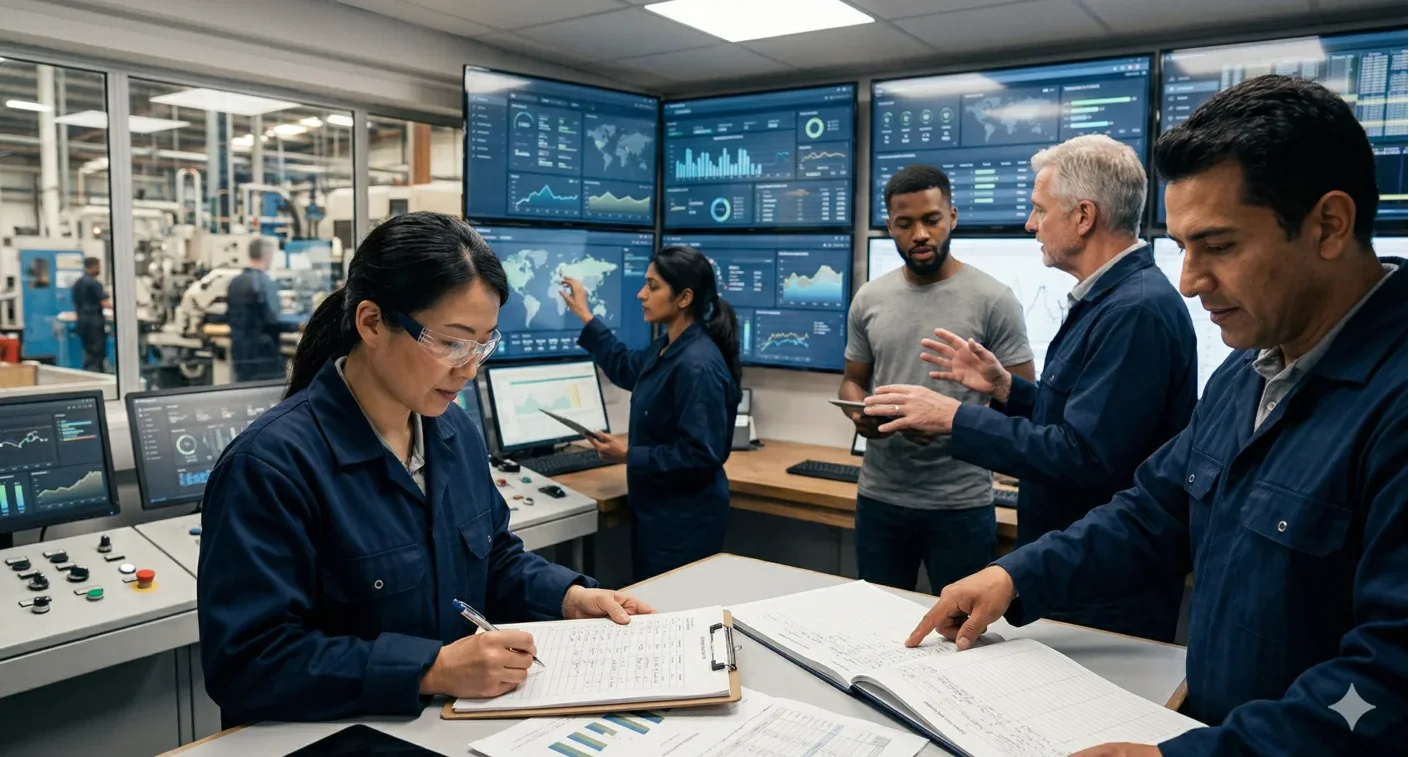
Today’s factories are flooded with data streams from machines, MES, quality control systems, and planning tools, yet many struggle to translate this abundance into timely, consistent action using traditional ai systems. The root cause of this paradox lies in fragmented, context-poor data and reliance on traditional dashboards. These dashboards primarily show what happened after an event but rarely explain why it happened or what corrective steps to take. Consequently, teams often spend hundreds of hours stitching together fragmented data reactively rather than proactively preventing issues such as production drift, downtime, and yield loss.
Jennifer Davis of Arch Systems Inc. explains, “Modern factories are not short on data. They are short on the ability to interpret it and act on it consistently. ” Traditional ai systems lack the intelligence to connect siloed data sources and provide real-time root cause analysis, leaving critical problems latent until they escalate and impact broader operations. As factories grow more complex and expert engineers face capacity constraints, relying on manual interpretation stalls decision-making and operational excellence.
This limitation in traditional factory data analytics fundamentally hinders manufacturers’ ability to maintain optimal operational efficiency and timely decision capacity — an urgent challenge that agentic AI manufacturing aims to solve.
UnderstandingAgentic AI in Manufacturing: Definition and Core Concepts
How Agentic AI Differs from Traditional AI Systems
Agentic AI manufacturing represents a transformative evolution from conventional artificial intelligence and machine learning applications in manufacturing. While traditional AI systems mostly provide passive insights or anomaly alerts, agentic AI acts as an intelligent operational partner, capable of interpreting complex manufacturing data contexts autonomously and driving guided actions. This form of AI functions beyond analysis by embedding expert-level decision-making directly into workflows, empowering the factory workforce to respond with precision and consistency.
By unifying data sources into a continuously updated “Data Twin” of the factory, agentic ai systems create a shared contextual view of production processes, machine states, and quality control metrics. This comprehensive model enables AI to trace causality, quantify impact, and recommend root cause corrections much like an experienced engineer would. These capabilities make agentic AI manufacturing an active participant in daily factory operations, facilitating a closed-loop cycle of detection, decision, action, and verified results.
Arch Systems’ approach exemplifies how agentic AI surpasses the limitations of traditional AI. Jennifer Davis remarks, “Dashboards tell you what happened. They do not tell you why it happened or what to do next. ” Agentic AI fills that vital gap by operationalizing decisions through guided workflows that scale expert reasoning across every shift and site.
Challenges in Factory Data and How Agentic AI Manufacturing Addresses Them
The Data Twin: Unifying and Activating Manufacturing Data
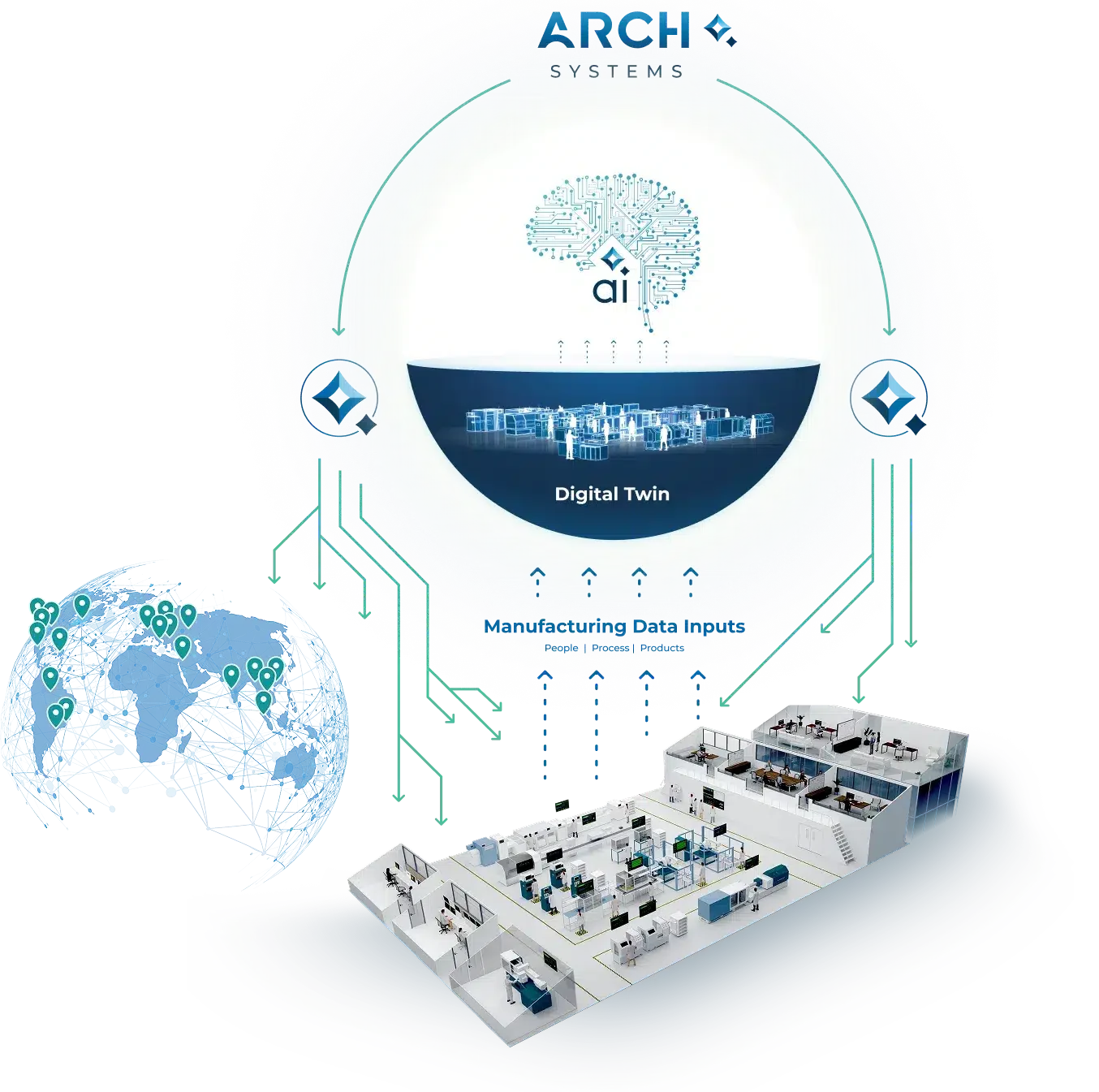
One of the greatest challenges in manufacturing data analytics is fragmentation. Multiple data sources — MES, PLCs, machines, quality systems, and planning tools — operate independently, creating information silos that obscure the full production context. Without synchronized, aligned data, factories miss the causal relationships critical for effective root cause analysis and timely intervention.
Arch Systems addresses this challenge by creating a “Data Twin,” a dynamic, continuously updated digital model of how a factory actually runs in real time, enabling seamless ai adoption. This Data Twin ingests, time-aligns, and contextualizes diverse data streams into a shared foundation that mirrors production flow by product, process, and shift. With this unified context, AI can interpret patterns and risks early, enabling proactive management instead of reactive firefighting.
Beyond insight generation, Arch Systems activates the data by embedding AI-driven recommendations directly into operational workflows. These guided actions are assigned to the right roles and tracked to resolution, ensuring that factories do not just identify problems but consistently solve them — a key distinction in the agentic AI manufacturing paradigm.
Real-World Impact: Case Study of Agentic AI Manufacturing in Action
Scaling AI-Driven Downtime Labeling Across Multiple Factories

Consider the example of a global automotive electronics supplier that leveraged Arch Systems’ agentic AI manufacturing platform to transform its downtime management. Initially deployed at a flagship factory in China, the system reduced downtime and generated more than $3. 7 million in hard savings over two years. This success was achieved by combining comprehensive data unification, automated downtime labeling, and AI-powered root cause analysis.
Automated Downtime Labeling, powered by Arch’s AI, replaces manual operator inputs by accurately identifying downtime sources directly from machine signals. This breakthrough eliminated operator burden, improved data accuracy, and accelerated problem resolution within a challenging high-speed, high-mix production environment. The company then scaled this AI-driven approach globally, achieving 100% adoption across all sites, significantly improving decision-making consistency and operational excellence worldwide.
Jennifer Davis highlights this transformative impact: “What is most significant is what happened next. The company was able to scale this approach globally without disrupting operations. All sites adopted Arch’s downtime tools, achieving 100 percent adoption and significantly improving data consistency and decision-making across factories. ” This case exemplifies how agentic AI manufacturing can scale expert factory expertise from a single site to an enterprise-wide playbook driving continuous improvement.
Agentic AI Systems: Driving Autonomous Innovation in Manufacturing
Integrating Agentic AI with Quality Control and Predictive Maintenance
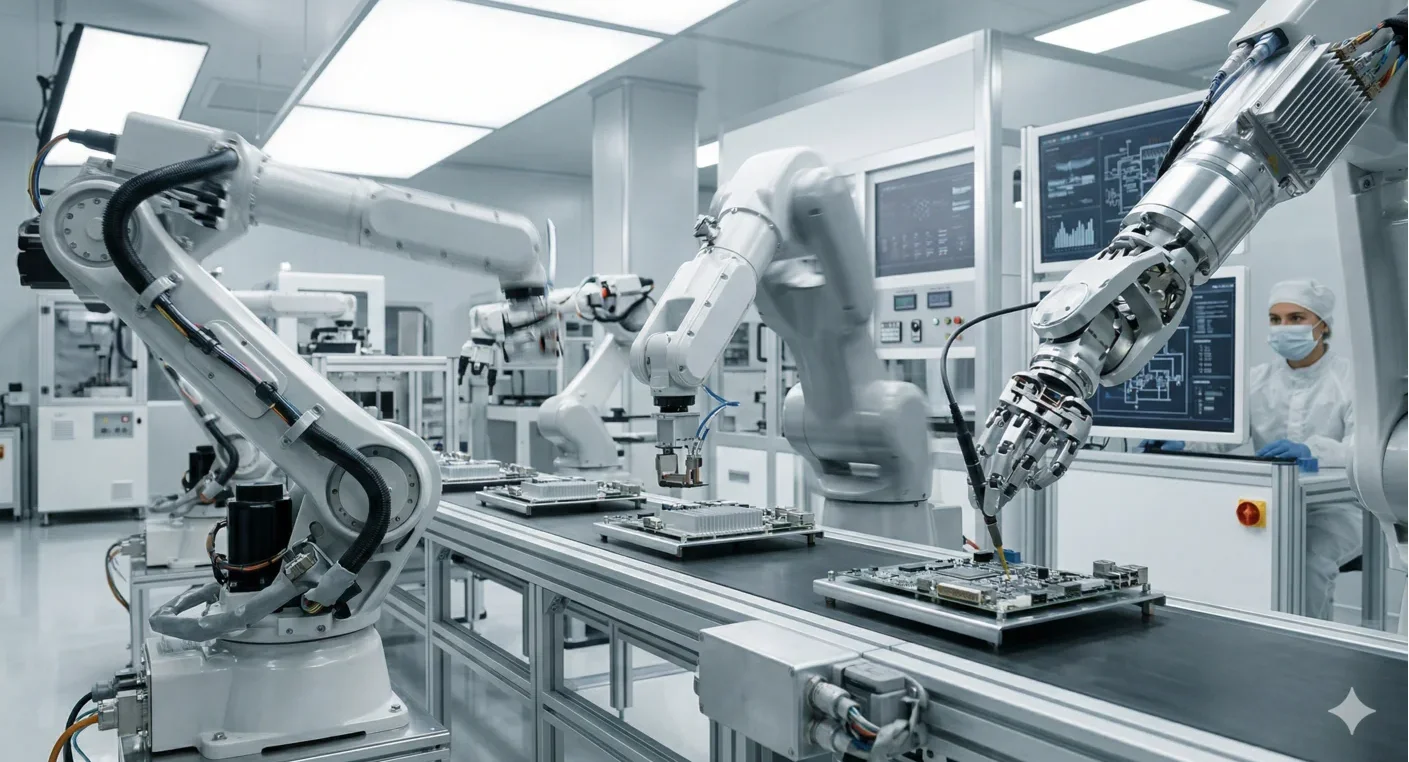
Agentic AI manufacturing extends its benefits beyond downtime reduction to several crucial factory operations, including quality control, predictive maintenance, and supply chain optimization. By integrating AI-powered decision-making agents with sensors and robotic systems, factories can detect quality deviations in real time and execute corrective measures autonomously or through guided human intervention.
Predictive maintenance powered by agentic ai anticipates machine failures before they occur by continuously analyzing operational data through the Data Twin, leveraging advanced ai agents for proactive interventions. This proactive approach reduces unplanned downtime, optimizes maintenance schedules, and extends equipment life — key components of operational excellence in modern manufacturing.
Moreover, agentic AI systems provide consistent execution of quality and maintenance workflows across shifts and sites, minimizing variability attributable to human factors. This consistency ensures manufacturing processes stay within tight control limits, increasing overall equipment effectiveness and product reliability.
Future Outlook: Expanding the Role of Agentic AI Manufacturing in 2026 and Beyond
From Isolated Improvements to Factory-Wide Optimization

Looking to 2027 and beyond, the trajectory for Agentic AI manufacturing is a shift from isolated improvements toward holistic, factory-wide optimization. Jennifer Davis shares that Arch Systems aims to deepen AI’s role, scaling agentic AI capabilities across more processes, factories, and operational domains. The vision encompasses connecting upstream planning with downstream execution, linking production stages over time, and orchestrating decisions seamlessly across sites.
This expanded view enables manufacturers to trace issues precisely from origin through propagation and intervene earlier with greater confidence and coordination. The ultimate goal is to transition manufacturing from a reactive model, dominated by after-the-fact analysis, to one driven by continuous, real-time decision-making. “The goal is not more visibility; it is more decision capacity,” Davis emphasizes.
Expertise will no longer be confined to a small team of specialists but scaled out to every operator and shift through AI-powered decision agents. This transformation promises smarter, more agile factories capable of adapting proactively to complexity and change, ensuring sustained competitive advantage.
| Feature | Traditional AI Systems | Agentic AI Manufacturing |
|---|---|---|
| Data Integration | Siloed, fragmented data sources | Unified Data Twin with shared context |
| Analysis Depth | Descriptive and diagnostic | Root cause identification and impact quantification |
| Decision Support | Alerts and dashboards only | Guided workflows with actionable next steps |
| Operational Impact | Reactive problem solving | Proactive, real-time problem prevention |
| Scalability | Limited to pilot projects or sites | Enterprise-wide adoption and consistent execution |
Common Misconceptions and Challenges in Adopting Agentic AI Manufacturing
Overcoming Barriers to AI Adoption in Manufacturing
Despite its transformative potential, agentic AI manufacturing faces certain ai adoption hurdles that require strategic planning and workforce engagement. One misconception is the belief that AI will replace human operators rather than augment their capabilities. Successful implementation requires educating teams on AI’s role as an expert collaborator, not a substitute.
Data complexity and legacy system integration present technical challenges that must be navigated carefully to unify factory data effectively. Furthermore, organizational change management is critical – pilot projects focusing on acute pain points like downtime or quality can build momentum and trust across teams.
Jennifer Davis advises, “The key to adoption sticking is guided workflows that help operators execute decisions consistently and clearly seeing ROI through reduced downtime and improved quality. ” Gradual scaling combined with ongoing training ensures sustainable transformation without disrupting ongoing operations.
Actionable Tips for Manufacturers to Implement Agentic AI Manufacturing
-
Start with a pilot project focusing on a critical pain point like downtime or quality control.
-
Unify data sources to create a comprehensive Data Twin of your factory.
-
Leverage AI systems that provide guided workflows for consistent decision execution.
-
Scale successful AI-driven processes across multiple sites gradually.
-
Invest in training operators and engineers to work alongside AI agents.
People Also Ask
-
What is Agentic AI in manufacturing?
Agentic AI in manufacturing refers to intelligent systems that interpret complex factory data to autonomously guide decisions and actions, extending beyond passive analytics. -
How does agentic AI improve factory operations?
It improves operations by unifying fragmented data, providing root cause analysis, and embedding actionable steps into workflows, increasing operational consistency and reducing downtime. -
What are the benefits of AI-driven downtime labeling?
AI-driven downtime labeling automates identification of downtime sources, reduces manual errors, accelerates root cause detection, and liberates operator bandwidth. -
How can manufacturers scale AI adoption across sites?
Scaling requires starting with pilot projects, demonstrating clear ROI, standardizing guided workflows, and progressively expanding across factories with training and change management. -
What challenges do factories face when implementing agentic AI?
Challenges include data fragmentation, legacy integration, workforce acceptance, and ensuring consistent AI-human collaboration for operational decisions.
Key Takeaways
-
Agentic AI manufacturing transforms fragmented data into autonomous decision-making and action.
-
Unified data models like the Data Twin are essential for effective AI interpretation and context.
-
Real-world deployments demonstrate significant cost savings and operational improvements.
-
Scaling AI across factories enables coordinated, continuous optimization and decision consistency.
-
Overcoming adoption challenges requires education, pilot projects, and clear demonstration of ROI.
Embracing Agentic AI Manufacturing for a Smarter Factory Future
To build smarter, more resilient factories, manufacturers should prioritize agentic AI systems that unify data, embed expert reasoning, and guide action — shifting from reactive analytics toward continuous, real-time operational decision-making.
Book a Demo to Experience Agentic AI Manufacturing
Book your personalized demo with Arch Systems today to see how Agentic AI in manufacturing can revolutionize your factory operations through intelligent ai systems and guided workflows.