
For entrepreneurs accustomed to optimizing every asset, your home is no different. Just as a well-crafted pitch deck is essential for securing funding, strategic home staging is critical for maximizing its sale price and ensuring a faster closing. This process isn't simply tidying up; it’s a calculated marketing strategy designed to maximize your return on investment. In the competitive real estate market, treating your property like a startup product—focusing on its presentation, target audience appeal, and perceived value—can yield significant returns on what is often a founder's largest personal asset. This approach aligns with core principles of startup growth strategies, where market positioning and user experience are paramount.
This guide provides a framework of actionable staging home for sale tips, reframing them as best business practices that any entrepreneur can appreciate. We will explore how to methodically transform your living space into a high-value, market-ready asset. By drawing parallels from the startup world of branding, customer acquisition, and market positioning, you will learn how to execute a successful sale with precision. Think of it as preparing your home for its most important "demo day," where first impressions directly translate into financial success.
1. Declutter and Depersonalize: The Blank Canvas Strategy
The first and most crucial step in any successful home staging project is creating a "blank canvas." This principle, widely adopted by real estate experts, involves systematically removing personal items, excess furniture, and clutter. The goal is to neutralize the space, transforming it from your home into a potential home for buyers. When prospective buyers walk through, they need the mental space to visualize their own lives, furniture, and memories there. Your personal collections and family photos can create a psychological barrier, making it harder for them to connect with the property, much like a product demo cluttered with irrelevant features can confuse an investor.
Why This Strategy Works
Depersonalizing is a core component of the best staging home for sale tips because it directly impacts a buyer's perception and emotional response. A clean, uncluttered home appears larger, brighter, and better maintained. It allows the home's best features, like architectural details or beautiful flooring, to stand out. This approach mirrors the founder's challenge of presenting a scalable business idea rather than a personal project. According to Investopedia, a well-staged home can sell faster and for a higher price, with decluttering being the most recommended activity by real estate agents.
Actionable Steps for Implementation
Creating a blank canvas requires a disciplined, operational approach—a key attribute for founder excellence. Start early and be methodical to avoid feeling overwhelmed.
- Rent a Storage Unit: This is a non-negotiable for most sellers. Box up anything you don't need for daily life, including seasonal clothing, collections, excess decor, and most personal photos. Think of this as archiving non-essential data before a major system upgrade.
- Clear All Surfaces: Countertops, coffee tables, and nightstands should be mostly clear. Leave only a few intentional, neutral items, like a single vase or a couple of tasteful books. This focuses attention on the core product.
- Address Hidden Clutter: Buyers will open closets and cabinets. Tidy these spaces to showcase their storage potential. Aim to have closets no more than half-full to create an impression of ample space, a key selling feature.
- Remove Personal Identifiers: Take down children's artwork from the refrigerator, personal calendars from the wall, and family portraits from the mantel. The goal is to make the home anonymous and universally appealing to the broadest target market.
By implementing the blank canvas strategy, you are not erasing your home's personality; you are creating a clean, inviting backdrop that empowers buyers to envision their future within its walls, a critical step toward securing a fast and profitable sale.
2. Neutralize Color Schemes
Just as decluttering creates a blank canvas with your belongings, neutralizing your home's color palette does the same for its walls and permanent fixtures. Bold, taste-specific colors can be a major roadblock for potential buyers, making it difficult for them to envision their own furniture and style within the space. The strategy is to repaint vibrant, dark, or personalized walls with soft, universally appealing tones like warm beige, greige, or off-white. This brand positioning tactic creates a bright, cohesive, and move-in-ready feel that appeals to the widest possible audience, maximizing your total addressable market.

Why This Strategy Works
A neutral color scheme is one of the most impactful yet cost-effective staging home for sale tips you can implement. Lighter, neutral colors make rooms appear larger and brighter, both in person and in online listing photos where first impressions are critical. It removes the buyer's first potential objection and the mental task of calculating repainting costs—a form of reducing friction in the customer acquisition process. This approach is supported by market analysis showing that homes with neutral interiors often sell faster.
Actionable Steps for Implementation
A fresh coat of paint offers one of the highest returns on investment in home staging. Be strategic with your color choices and application for maximum effect, similar to A/B testing a landing page.
- Choose Proven Neutrals: You can't go wrong with widely recommended colors known for their mass appeal. Benjamin Moore's 'Revere Pewter' and Sherwin-Williams' 'Agreeable Gray' are two go-to choices for professional stagers.
- Test Your Colors: Always buy sample pots and paint swatches on different walls in a room. Observe how the color looks in natural daylight, in the evening, and with artificial lighting before committing.
- Consider the Finish: Use a matte or eggshell finish for living areas and bedrooms to hide minor imperfections. Opt for a more durable semi-gloss or satin finish in high-moisture areas like kitchens and bathrooms for an easy-to-clean appearance.
- Add Color with Accessories: A neutral backdrop doesn't mean the space has to be boring. Introduce subtle pops of color through easily removable items like throw pillows, artwork, towels, or a vase of flowers. These are your "feature highlights" that don't alter the core product.
By neutralizing your color palette, you are not stripping the home of its character; you are enhancing its best features and presenting a clean, sophisticated space that allows buyers to fall in love with the home itself, not your personal style.
3. Maximize Natural Light and Lighting
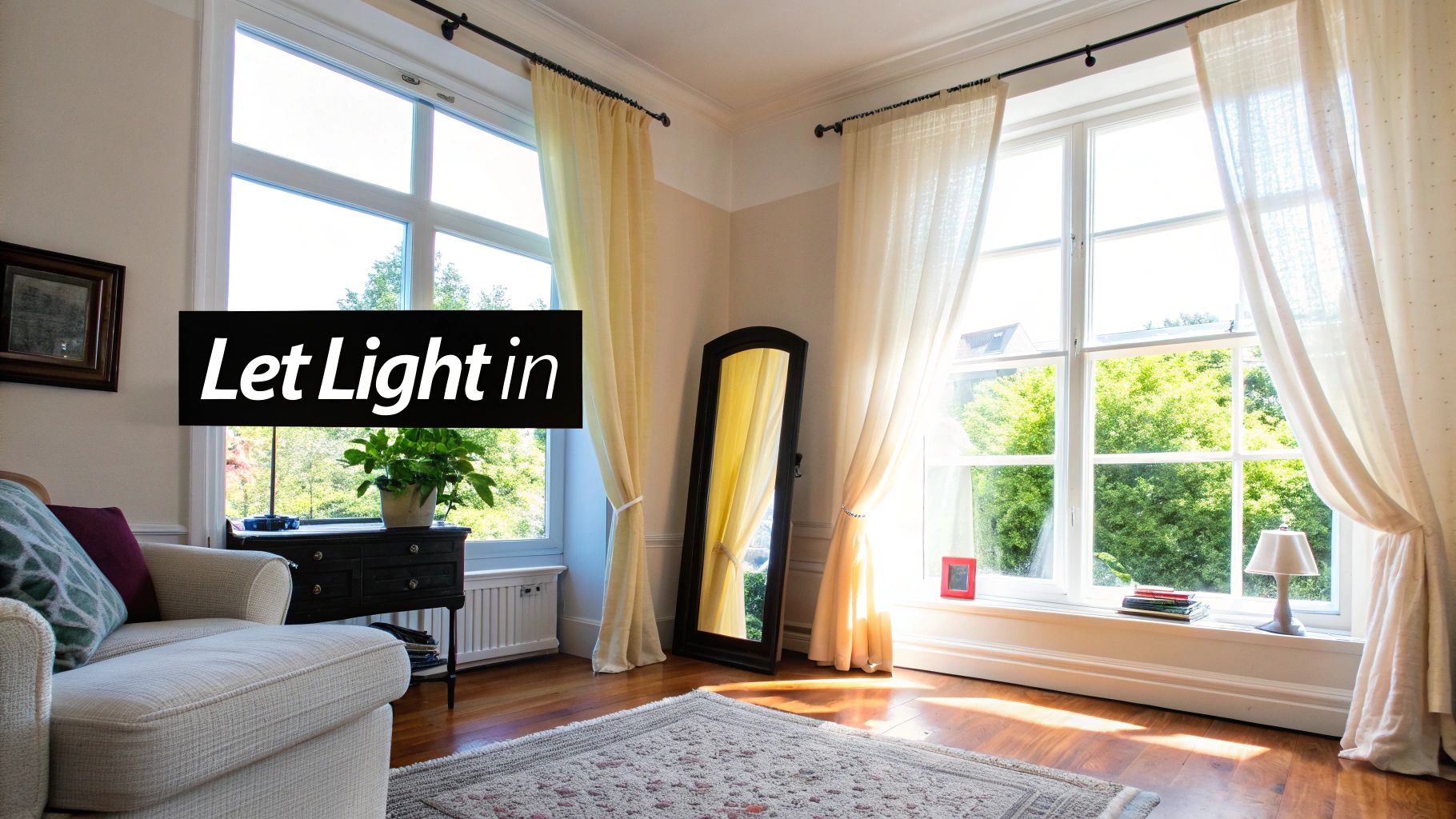
One of the most transformative staging techniques involves strategically enhancing your home's brightness. This principle focuses on maximizing natural light sources while supplementing with well-placed artificial lighting. A bright, well-lit home feels larger, more inviting, and psychologically more appealing to buyers. Dark corners can make a room feel small and unwelcoming, while ample light highlights the home's best features and creates a cheerful, positive atmosphere. This is the real estate equivalent of optimizing a user interface for clarity and appeal.
Why This Strategy Works
Optimizing light is a powerful component of effective staging home for sale tips because it directly influences a buyer's emotional response and perception of space. A bright interior not only looks better in listing photos—the first touchpoint in your sales funnel—but also feels more valuable in person. Research from sources like the National Association of Realtors consistently shows that buyers prioritize good lighting. A well-lit home signals transparency and quality, building trust from the outset.
Actionable Steps for Implementation
A layered approach to lighting ensures your home shines during every showing, day or night. Follow these practical steps to illuminate your property’s best qualities.
- Clean Windows and Remove Obstructions: Start by cleaning all windows inside and out. Trim back any overgrown trees or shrubs that are blocking natural light from entering the home. This is low-hanging fruit for immediate improvement.
- Use Lightweight Window Treatments: Swap heavy, dark curtains for lightweight, sheer panels that allow maximum daylight to filter through while still providing a sense of privacy. Open all blinds and curtains before a showing.
- Upgrade and Unify Light Bulbs: Replace any burnt-out bulbs and ensure all fixtures have bright, high-quality bulbs. Use a consistent color temperature (like "soft white" or "daylight") throughout the home for a cohesive, professional look.
- Incorporate Mirrors Strategically: Place a large mirror directly across from a window to reflect light and the view, effectively doubling the brightness and creating an illusion of depth in smaller rooms.
- Add Layers of Light: Ensure every room has three types of lighting: ambient (overhead fixtures), task (reading lamps), and accent (uplighting for plants or art). This creates a warm, inviting, and well-designed feel.
4. Create Defined Spaces and Traffic Flow
A well-staged home guides buyers on a journey, making them feel comfortable and able to see the full potential of the layout. The principle of creating defined spaces and clear traffic flow, a cornerstone of professional interior design, involves arranging furniture to give each room a clear purpose while ensuring an intuitive path from one area to the next. This prevents buyers from feeling confused or cramped and helps them mentally "place" their own furniture in the home, a key step in making an emotional connection. This is analogous to designing a seamless user experience (UX) for a digital product.

Why This Strategy Works
Strategic furniture placement is one of the most impactful staging home for sale tips because it directly influences how buyers experience the home's size and functionality. An undefined or poorly arranged room can feel smaller and less useful. By creating logical zones and easy pathways, you highlight the home's versatility and flow. This operational efficiency demonstrates the property’s value proposition clearly. A generic case illustrates this: a seller successfully transformed an unused formal dining room into a stylish home office, a move that strongly appealed to the growing market of remote workers and demonstrated adaptability.
Actionable Steps for Implementation
Implementing this strategy requires thinking like a buyer walking through the home for the first time. Your goal is to make the journey effortless and logical.
- Establish Clear Pathways: Ensure there is at least 3 feet of walking space in all major traffic areas, like from the front door to the kitchen. Remove any furniture that obstructs this flow.
- Define Zones with Rugs: In open-concept spaces, use area rugs to anchor furniture groupings and visually separate different functional zones, such as a living area from a dining area. This helps define the "features" of the space.
- Pull Furniture Away from Walls: Avoid pushing all furniture flat against the walls. "Floating" a sofa in the middle of a room can create a more dynamic, inviting, and spacious feel.
- Create Conversation Areas: Arrange furniture in small, logical groupings that encourage interaction. This makes spaces like living rooms feel more purposeful and welcoming.
By defining each space and optimizing traffic flow, you are not just arranging furniture; you are choreographing the buyer's experience, demonstrating the home's practicality and making it feel larger, more functional, and instantly livable.
5. Focus on Curb Appeal: Winning the First Impression
The first impression a buyer has of your home isn't when they step through the door; it's the moment they pull up to the curb. This initial visual impact, known as curb appeal, can instantly set a positive or negative tone for the entire showing. Just as a startup's landing page must be compelling, a well-maintained, attractive exterior signals that the home is cared for, inviting buyers inside with a sense of confidence and high expectation. The value of publicity and first impressions cannot be overstated in this process.
Why This Strategy Works
Investing in the exterior is one of the most effective staging home for sale tips because it delivers an exceptional return on investment and directly influences buyer psychology. A pristine exterior suggests a well-maintained interior, immediately building trust and credibility. It also helps your property stand out in online listings where the primary photo is almost always of the home's facade. This is your most critical piece of marketing collateral.
Actionable Steps for Implementation
Enhancing your curb appeal doesn't require a complete overhaul. Small, strategic improvements can make a significant difference.
- Clean and Repair: Power wash driveways, walkways, siding, and decks. Repair any cracked pavement, replace broken roof tiles, and ensure all gutters are clean and securely attached.
- Elevate Landscaping: Mow the lawn, trim overgrown bushes, and pull all weeds. Add fresh mulch to garden beds and plant colorful, seasonal flowers in pots or along walkways to add a vibrant pop of color.
- Highlight the Entryway: The front door is a focal point. Apply a fresh coat of paint in a classic or complementary color. Add a new, stylish welcome mat, and replace old house numbers and your mailbox with crisp, modern ones.
- Improve Lighting: Ensure all exterior lights are working. Consider adding elegant, solar-powered pathway lights to create a warm and inviting ambiance for evening viewings.
By focusing on curb appeal, you create an irresistible invitation that captures a buyer's interest before they even cross the threshold. This powerful first impression can significantly increase perceived value and reduce the time your home spends on the market.
6. Stage Key Rooms with Purpose
Not all rooms are created equal in the eyes of a home buyer. The strategy of staging key rooms with purpose is a highly effective, budget-conscious approach that concentrates your time, energy, and resources on the areas that most heavily influence a buyer's decision. This concept involves prioritizing the living room, master bedroom, kitchen, and main bathroom. These are the spaces where buyers spend the most time and where they mentally "move in." Focusing on these areas is a form of Pareto principle (80/20 rule) application for maximum impact.
Why This Strategy Works
Focusing your efforts provides the greatest return on investment, a core principle in best business practices. A beautifully staged living room helps buyers envision entertaining, while a serene master bedroom creates an emotional connection to the home as a personal retreat. The kitchen and main bathroom are functional powerhouses; presenting them as updated, clean, and spacious can significantly boost a home's perceived value. This targeted approach prevents spreading your budget too thin across less impactful areas. For instance, a common case study shows that a targeted investment in kitchen and bath updates consistently yields a high ROI.
Actionable Steps for Implementation
To stage key rooms with purpose, adopt a "model home" mentality for each prioritized space, focusing on aspirational but accessible lifestyle presentation.
- Define a Focal Point: In the living room, arrange furniture to highlight a feature like a fireplace or a large window. In the bedroom, the bed should be the undeniable star, dressed in luxurious, neutral bedding.
- Invest in High-Impact Accents: Purchase new, fluffy white towels and a modern shower curtain for the main bathroom. Add a bowl of fresh fruit or a single orchid to the kitchen island. These small details signal that the home is well-cared-for.
- Create Lifestyle Vignettes: Set up small, curated scenes that suggest a desirable lifestyle. Place a couple of coffee mugs and a book on a small table in the living room, or set up a tray with sparkling water and two glasses on the master bedroom nightstand.
- Apply the '5-Foot Rule': Stand in the doorway of each key room. Everything within the first five feet of your view must be perfect, from the cleanliness of the floors to the art on the walls. This is a buyer's critical first impression zone.
By strategically staging the rooms that matter most, you make a powerful and positive impression where it counts, guiding buyers to see the home's maximum potential and encouraging a faster, more profitable offer.
7. Deep Clean and Make Minor Repairs: The Well-Maintained Signal
Beyond decluttering, the next critical layer of staging is ensuring the home is impeccably clean and free of minor, distracting faults. This step involves a deep, thorough cleaning of every surface and a systematic approach to fixing small issues like leaky faucets or scuffed paint. A spotless, well-maintained home sends a powerful subconscious signal to buyers: that the property has been cared for meticulously. This preemptively addresses buyer concerns about hidden problems and builds trust in the home's overall condition, much like a startup passing due diligence with clean financial records.
Why This Strategy Works
This is one of the most effective staging home for sale tips because it directly impacts a buyer’s perception of value and risk. Minor imperfections can accumulate in a buyer's mind, creating an impression of neglect that can lead to lower offers. Conversely, a home that is pristine and fully functional feels move-in ready and justifies its asking price. This is about quality control and ensuring the final product is bug-free before shipping.
Actionable Steps for Implementation
A systematic approach ensures nothing is overlooked. Treat this process like a pre-inspection to identify and resolve issues before buyers do.
- Hire Professional Cleaners: For a truly deep clean, it's often worth hiring professionals. They have the tools and expertise to tackle tough jobs like grout, windows, and light fixtures, ensuring a level of cleanliness that is difficult to achieve on your own.
- Create a Repair Checklist: Walk through your home with a critical eye, room by room, and list every minor repair needed. This includes fixing dripping taps, replacing broken switch plates, tightening loose handles, and patching small holes in walls.
- Focus on Kitchens and Bathrooms: These areas receive the most scrutiny. Ensure all appliances are spotless inside and out, sinks and faucets shine, and tile grout is clean.
- Address Floors and Walls: Scuffed baseboards and marked-up walls can make a home look worn. A fresh coat of neutral paint is a high-impact, low-cost investment. Consider professional carpet cleaning or refinishing hardwoods if they look tired.
By dedicating time to deep cleaning and minor repairs, you present a property that radiates pride of ownership, allowing buyers to focus on its best features instead of its flaws.
Your Final Pitch: Executing a Successful Exit
The journey from listing to closing a home sale mirrors the strategic lifecycle of a successful startup. Just as an entrepreneur meticulously prepares a company for an acquisition, a homeowner must prepare their property for its final, most important pitch to the market. The comprehensive list of staging home for sale tips provided is not merely a collection of decorating suggestions; it is a strategic framework for maximizing the value of a significant personal asset. Each step, from the foundational work of decluttering to the final polish of enhancing curb appeal, is an investment in your product's marketability.
Viewing your home through the eyes of a potential buyer is akin to a founder understanding their target customer. The goal is to remove friction, eliminate objections, and create an emotional connection that transforms a prospect into a buyer. By neutralizing color palettes, you are creating a blank canvas, allowing buyers to project their own aspirations onto the space. By maximizing light and creating a clear traffic flow, you are enhancing the user experience, making the "product" feel more intuitive and valuable. These are calculated business decisions designed to broaden appeal and accelerate the sales cycle.
Key Takeaways for a Winning Home Sale
Mastering the art of home staging is about controlling the narrative. You are shifting the perception of your property from a personal space to a desirable, market-ready product. Here are the most critical takeaways to guide your execution:
- First Impressions are Foundational: Your efforts in enhancing curb appeal and deep cleaning are non-negotiable. These actions set the tone and build the initial credibility essential for any successful pitch.
- Space is the Ultimate Luxury: Decluttering isn't just about tidying up; it's about creating the perception of more space. A clean, organized environment signals that the home has been well-maintained and has ample room for a new owner's life.
- Functionality Sells: Staging key rooms with a clear purpose helps buyers understand how they can live in the space. This targeted approach demonstrates the home's potential and justifies its price point, much like a strong use case for a new technology.
Ultimately, these staging home for sale tips are about applying a founder’s mindset to your personal finances. It requires vision, strategic resource allocation, and a relentless focus on the end user—the buyer. By implementing these strategies, you are not just selling a house; you are executing a successful exit, ensuring you capture the maximum return on your investment.
Ready to apply an entrepreneurial mindset to every challenge you face? Discover frameworks for growth, financial management, and strategic decision-making at Spotlight on Startups. Visit Spotlight on Startups to access the insights that help founders and innovators build, scale, and succeed.