
Bioliberty News: Did you know that many neurological patients receive insufficient therapy intensity to achieve optimal recovery? This startling reality highlights a growing need in physical rehabilitation — one that wearable robotics in therapy are uniquely positioned to address. As demands on therapists increase and clinical resources remain tight, the fusion of soft robotics, AI, and gamified exercises promises a new path toward sustainable, effective therapy. This article explores these innovations through the expert perspective of Conan Bradley, Co-Founder of Bioliberty, whose groundbreaking Lifehub Clinic system redefines high-intensity upper extremity rehabilitation.
Bioliberty at APTA: The Growing Need for Wearable Robotics in Therapy
The Challenge of Delivering High-Intensity Therapy in Modern Rehabilitation
High-intensity therapy is widely acknowledged by rehabilitation specialists as the gold standard for neurological recovery, especially after events like stroke. However, delivering this level of therapy consistently remains a formidable challenge in everyday clinical settings. Therapists face multiple constraints, including time shortages, large caseloads, and significant physical demands, all of which limit how much repetitive, targeted therapy patients actually receive.
Conan Bradley, Co-Founder of Bioliberty, explains, “Time constraints, limited patient engagement, and the physical demands placed on therapists often restrict the intensity of therapy required for meaningful recovery. ” This summary captures the crux of the issue—therapists simply cannot sustain the manual intensity needed for every patient while also managing administrative and observational duties.
Wearable robotics in therapy offer a promising solution to overcome these barriers by enabling higher dose therapy without escalating clinician workload. Through the integration of robotics and motivational gamification, patients can perform more repetitions safely and effectively, while therapists prioritize coaching and clinical decisions.
How Wearable Robotics in Therapy Address Intensity and Engagement Barriers
Wearable robotics in therapy directly tackle two major obstacles: intensity and patient engagement. By providing robotic assistance—such as with Bioliberty’s patented soft robotic wearable Lifeglov—these devices help patients execute motions they otherwise could not, enabling intensive repetitive task practice to stimulate neuroplasticity.
Moreover, the integration of game-based exercises imbues therapy with motivation and enjoyment, extending patient participation and adherence. This dual approach ensures that the therapy delivered is not only more frequent but also more meaningful, which is critical in motor rehabilitation.
Conan Bradley emphasizes, “Bioliberty addresses the challenge of limited therapy intensity by combining robotics, AI, and gamified exercises to motivate patients while remaining sustainable for clinicians. ” By integrating these technologies, modern rehabilitation platforms can deliver more consistent, engaging support than traditional, fully manual therapy methods.
Overview of Wearable Robotics in Therapy: Defining the Technology and Its Role
What Are Wearable Robots and Soft Robotic Devices?
Wearable robots are compact, patient-mounted devices designed to assist and enhance movements during therapy. In contrast to rigid exoskeletons, Bioliberty’s flagship wearable, Lifeglov, utilizes soft robotics technology, featuring flexible materials powered by pneumatics to deliver gentle and calibrated assistance for hand opening.
These robots are engineered not only to aid movement but also to integrate seamlessly with therapy exercises, capturing data and adapting assistance according to patient progress. This personalization is key to maximizing functional gains and maintaining patient safety.
The Role of Robotic Systems in Motor Rehabilitation
Robotic systems in motor rehabilitation serve as force multipliers for therapists. By assisting repetitive movements, they amplify the intensity of therapy sessions and facilitate neuroplasticity—the brain’s ability to rewire itself following injury. Especially in upper limb rehabilitation, robotic systems can specifically target impaired hand and arm function, enabling higher repetition rates and precision.
Instead of replacing therapists, these robotic systems act as tools that unlock previously unattainable levels of therapy dosage, while providing real-time feedback and progress tracking. This allows clinicians to monitor improvements and modify treatment plans based on objective data, enhancing clinical decision-making.

Bioliberty’s Unique Approach to Wearable Robotics in Therapy
Introducing Lifehub Clinic and the Lifeglov Soft Robotic Wearable
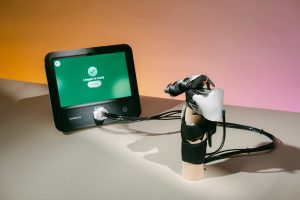
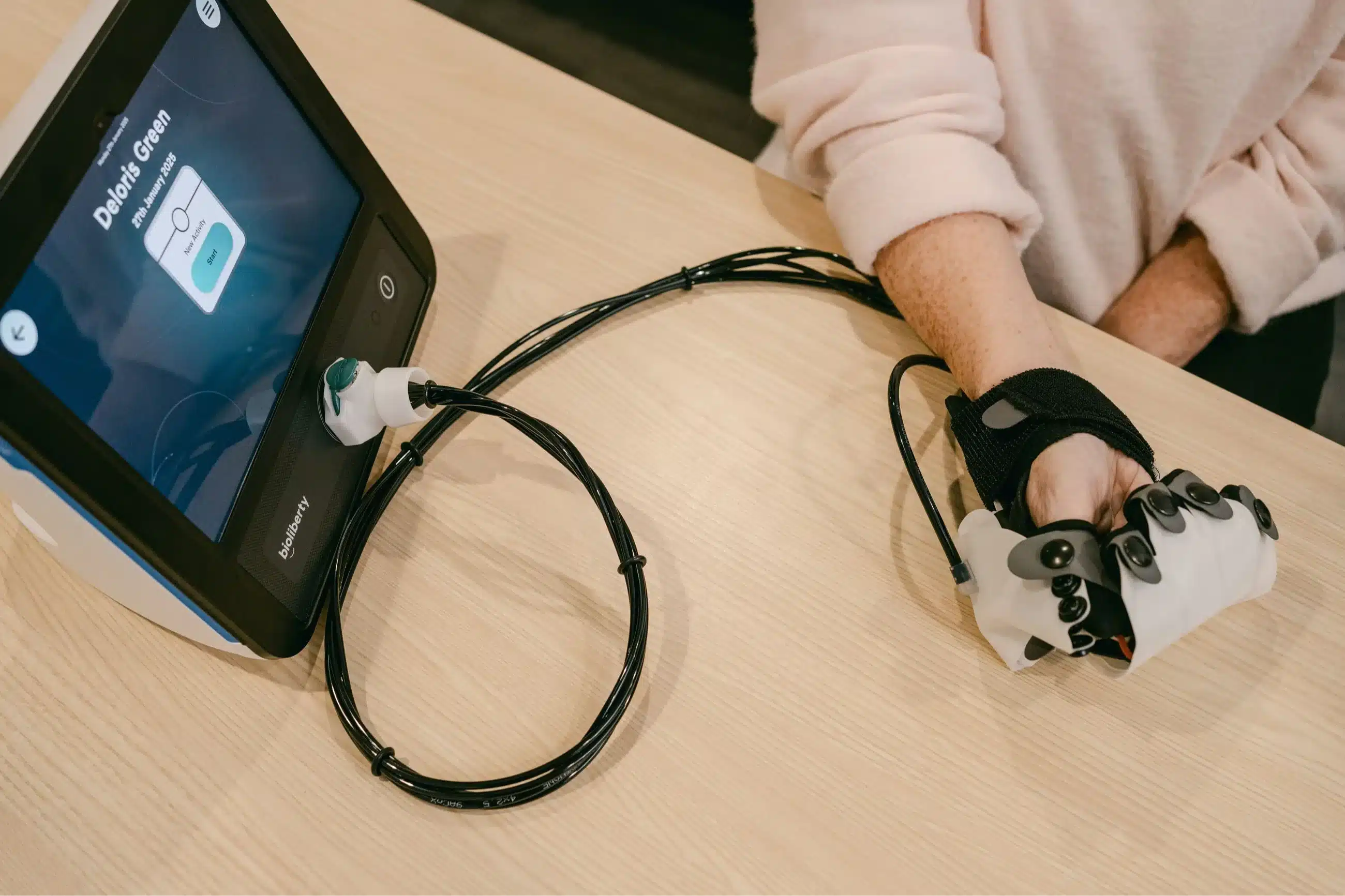
Bioliberty’s Lifehub Clinic is a pioneering clinical toolset that combines a soft robotic wearable—Lifeglov—with AI-driven, gamified therapy exercises. Launching in May 2025, this system specifically targets upper extremity rehabilitation for patients with impaired hand function, such as those recovering from stroke.
Lifeglov, powered by air, assists patients by gently opening the hand and calibrating assistance levels to match individual functional abilities. This wearable allows patients to perform high-dose, repetitive task practice in a way that is both motivating and clinically effective.
“Bioliberty addresses the challenge of limited therapy intensity by combining robotics, AI, and gamified exercises to motivate patients while remaining sustainable for clinicians,” explains the Bioliberty team.
How Lifehub Clinic Enhances Robotic Therapy and Physical Therapy Outcomes
Lifehub Clinic elevates motor rehabilitation by increasing therapy intensity without increasing therapists’ physical burden. Patients benefit from engaging, game-based tasks that promote neuroplasticity and steadily restore limb control. This approach not only improves motor recovery but also patients’ motivation and long-term adherence to therapy.
Clinicians, meanwhile, can focus on observing, coaching, and making clinical decisions rather than performing repetitive manual movements. The system’s built-in data capture also supports documentation and treatment planning, providing measurable insights into patient progress and therapy effectiveness.
Reducing Therapist Strain and Increasing Therapy Efficiency with Wearable Robotic Systems
By mechanizing the physically demanding aspects of therapy, Lifehub Clinic significantly reduces therapist strain—a common source of occupational injury and burnout. This improvement in clinician workflow does not compromise patient care but rather enhances the quality and sustainability of rehabilitation services.
Conan Bradley notes, “Lifehub Clinic supports documentation needs and provides insights that help guide treatment planning. The result is a therapy experience that is more scalable, more efficient, and more sustainable for clinicians across inpatient and outpatient care. ”

Current Trends and Challenges in Robotic Rehabilitation
The Shift Toward High-Intensity Dosing in Neurological Rehabilitation
Scientific consensus increasingly favors high-intensity dosing for neurological rehabilitation. Research demonstrates that frequent, repeated practice of motor tasks accelerates recovery by reinforcing neural pathways. Unfortunately, many patients do not receive therapy at the required intensity due to clinical resource limitations.
Wearable robotics are helping bridge this gap by enabling higher dose therapy without adding to therapist workload. They make evidence-based high-intensity practice more achievable in daily clinical routines, particularly important given rising neurological injury cases.
Addressing Staffing and Caseload Pressures with Scalable Robotic Therapy Solutions
Healthcare facilities face growing caseloads and workforce shortages, which exacerbate the challenge of delivering intensive therapy. Scalable robotic solutions like Lifehub Clinic provide a practical response, enabling therapists to manage more patients effectively without compromising care quality.
Bioliberty is proud to contribute to this shifting landscape, allowing clinicians to meet growing demands through technology that fits seamlessly into real-world clinical workflows.
Expert Insights: The Future of Wearable Robotics in Therapy
According to Bioliberty, “Our commitment is to design technology that is intuitive, scalable, and purpose-built for the realities of modern therapy.”
Upcoming Innovations and Software Enhancements in Wearable Robotic Systems
Beyond the Lifehub Clinic, Bioliberty is innovating further with new software functions and additional soft robotic wearables currently in development. These enhancements aim to expand therapy applicability, improve user experience, and deepen data analytics to better support clinical decisions.
Clinicians can expect evolving tools that retain ease of use while addressing broader rehabilitation needs, demonstrating Bioliberty’s steadfast focus on clinician-first design principles.
The Role of Data Capture and Analytics in Guiding Robotic Therapy Planning
Integral to modern wearable robotics is robust data capture, which informs therapists of patient progress and therapy effectiveness. Lifehub Clinic collects comprehensive metrics during sessions, allowing for precise adjustment of therapy dosage and personalized treatment plans.
This data-driven approach enhances clinical outcomes by making rehabilitation more responsive and tailored, ensuring patients receive the optimal intensity and type of therapy needed for recovery.
Common Misconceptions and FAQs About Wearable Robotics in Therapy
-
What is wearable robotics? Wearable robotics are devices worn by patients to assist movement and enhance therapy intensity.
-
What is the robot technique in therapy? It refers to using robots to aid repetitive task practice, often combined with clinician supervision.
-
What are the 4 D’s of robotics? The 4 D’s—Discover, Design, Develop, Deploy—outline the lifecycle of robotics development in therapy.
-
What is robotics therapy? Robotics therapy uses robotic devices to assist rehabilitation exercises, improving motor recovery.
Actionable Tips for Clinicians Considering Wearable Robotic Devices
-
Evaluate patient suitability for wearable robotic therapy based on functional needs and rehabilitation goals.
-
Incorporate gamified exercises to enhance patient engagement and therapy adherence.
-
Leverage data insights from robotic systems to tailor individualized treatment plans.
-
Balance therapy intensity with clinician workload to ensure sustainable practice.
Key Takeaways: The Impact of Wearable Robotics in Therapy
| Benefit | Description | Impact on Therapy |
|---|---|---|
| Increased Therapy Intensity | Enables high-dose repetitive task practice | Improves neuroplasticity and recovery outcomes |
| Reduced Therapist Strain | Minimizes physical demands on clinicians | Enhances sustainability of therapy delivery |
| Enhanced Patient Engagement | Gamified exercises motivate longer participation | Boosts functional progress |
| Data-Driven Treatment | Built-in data capture supports documentation | Informs clinical decision-making |
Embracing Wearable Robotics for Sustainable Therapy Solutions
Bioliberty’s innovative approach exemplifies how wearable robotics in therapy can transform rehabilitation, making it more effective and sustainable for both patients and clinicians.
Clinicians eager to elevate patient outcomes and streamline therapy delivery should explore wearable robotics like Lifehub Clinic as a practical, evidence-informed solution.
People Also Ask About Wearable Robotics in Therapy
-
What is wearable robotics?
-
What is the robot technique in therapy?
-
What are the 4 D’s of robotics?
-
What is robotics therapy?
Call to Action: Let’s Rebuild Patient Independence Together
Request a demo to experience firsthand how wearable robotics in therapy can elevate your clinical practice and patient outcomes.
For more information about Bioliberty and innovations in wearable robotics in therapy, visit https://www. bioliberty. com.