
Modern Successors To Thomas Edison
Imagine standing in the dim glow of late nineteenth-century Menlo Park, where Thomas Edison, a determined young man with little sleep and boundless ambition, wires the world to banish darkness. Fast-forward to today and that same spirit—once lit by carbon filaments—is alive in sprawling fusion labs, where innovators are working tirelessly to harness the power of the stars. If Edison solved the “Darkness Problem,” the modern successors to Thomas Edison are tackling the much bigger “Energy Density Problem” — seeking to give humanity clean energy whenever, wherever it’s needed. This article spotlights these inheritors of Edison’s legacy, drawing compelling links from historic breakthroughs to the modern race for nuclear fusion.
Illuminating the Path: The Enduring Legacy of the Modern Successors to Thomas Edison
The way we light our homes and power our cities was forever changed by Thomas Edison’s vision, but it was not the light bulb alone that transformed modern life. Edison established the world’s first power utility—Pearl Street Station—which pioneered not just products, but entire systems. Today, the modern successors to Thomas Edison face a new grand challenge: delivering abundant, carbon-free, baseload energy to a world of billions. They’re not merely refining an old design; these innovators are revolutionizing how we produce and distribute energy, driving humanity toward a future where energy scarcity is eliminated. At the forefront are fusion start-ups, with research labs as daring and well-equipped as Menlo Park, applying science far beyond Edison’s materials—testing the boundaries of plasma, superconductors, and magnetic confinement. In honoring Edison’s cross-disciplinary approach and commitment to utility, today’s fusion pioneers echo not just his inventions but his relentless systems thinking—shifting the dream from light bulbs to energy so plentiful it may soon be too cheap to meter.
What You’ll Learn: The Journey from Light Bulb to Fusion Power
-
How the modern successors to Thomas Edison are revolutionizing energy.
-
Why the spirit of invention has shifted from Menlo Park to new fusion startups.
-
What drives the contemporary ‘Menlo Parks’—the start-ups driving innovation in fusion and sustainable energy.
-
The role of leaders like Commonwealth Fusion Systems and Helion Energy as today’s George Westinghouse and Thomas Edison.
-
The challenges facing the next generation of inventors tackling the ‘Energy Density Problem.’
A Glance Back: Thomas Edison, Menlo Park, and the First Light Bulb Revolution
To understand the ambitions of the modern successors to Thomas Edison, we revisit Menlo Park, New Jersey—Edison’s famed research lab that pioneered innovations beyond the electric light bulb. In a world where telegraph cable networks triggered the first surge of instant communication and the Civil War spurred nationwide technological leapfrogging, Edison’s achievements seem even more monumental. It wasn’t the light bulb per se, but the leap in infrastructure and vision—the birth of utility power—that defined his impact. These breakthroughs transformed more than light; they reengineered cities, catalyzed the mass media era, and inspired future luminaries from Henry Ford to Steve Jobs. Just as Edison’s genius moved the United States beyond whale oil lamps to electrified metropolises, today’s energy visionaries stand poised to redefine our thresholds of possibility.
The Original Menlo Park: Innovation Beyond the Carbon Filament
Edison’s Menlo Park laboratory wasn’t only about tinkering with filaments—it set the standard for the American research lab. The team’s collective obsession wasn’t limited to the electric light bulb; their experiments built a foundation for technology’s relentless march. Here, Edison’s approach combined gritty trial-and-error with big-picture ambition, a playbook the modern successors to Thomas Edison continually reference. Out of Menlo Park sprang not just better lighting, but innovations in music player cylinders and telegraph cable networks, with ripple effects that touched everything from industry to popular culture—precursors to the interconnected digital media landscape of today. The practice of marrying persistent incremental improvement with visionary systems design would later be echoed by icons like Steve Jobs, Nikola Tesla, and beyond.
Pearl Street Station: The Birth of Utility Power
The real revolution was Pearl Street Station in New York City—a central generator using direct current networks to light entire neighborhoods, laying the groundwork for modern electric grids. Edison’s creation bridged the world from parochial lighting to electrified urban life, making possible everything from electric trolleys to mass communication. This move from invention to infrastructure would inspire other entrepreneurial minds, including George Westinghouse, to drive further advances like alternating current—rivalries and collaborations that underpin our present day global energy market. Edison’s bold systems thinking finds its echo in today’s fusion startups, where the product is not just a new device but the platform upon which the next era of civilization will be built.
From Telegraph Cable to Civil War: The Broad Impact of Edison’s Era
The late nineteenth century, marked by the Civil War and rapid technological advances, saw breathtaking leaps in American innovation. Huge lengths of telegraph cables spanned continents, allowing Morse code messages to travel farther than ever before, revolutionizing communication. The Civil War, while devastating, also catalyzed unprecedented advances in engineering and logistics, which Edison leveraged in both his early career and at Menlo Park. These breakthroughs gave rise to a generation of tinkerers and visionaries, including Edison and his perennial collaborator and competitor, George Westinghouse. The intertwining stories of Edison and George Westinghouse set the precedent for the fierce but fruitful competition among today’s energy innovators. Their drive for system-wide change, rather than mere gadgets, became a key feature passed down to the modern successors to Thomas Edison.
“Genius is one percent inspiration and ninety-nine percent perspiration.” —Thomas Edison
The Modern Successors to Thomas Edison: New Innovators, Old Challenges
Fast-forward to today, and the biggest laboratories aren’t just in Silicon Valley—they’re in America’s energy corridors. Commonwealth Fusion Systems (CFS) and Helion Energy are the new Menlo Parks, uniting colossal ambition and relentless experimentation. These modern successors to Thomas Edison face challenges remarkably similar to Edison’s—solving not only for the device, but also for the utility, the grid, and the system that will carry electricity into the next century. The challenge this time? Creating fusion—the process that powers the sun—here on Earth, and making it work for billions. Today’s competition echoes that of Edison and Westinghouse: dueling approaches, parallel breakthroughs, and a focus on translating science into scalable, dependable infrastructure. Each experiment with a high-temperature superconductor or plasma containment ring is the new equivalent of trying countless light bulb filaments, with success promising a civilization-level breakthrough.
The journey of these innovators is not unlike the path taken by other visionary founders who have shaped the startup landscape. For a closer look at the entrepreneurial mindset and strategies that drive breakthrough companies, you can explore the profiles and insights from leading startup founders featured on Spotlight On Startups.
Replicating the Sun: Commonwealth Fusion Systems and Helion Energy
While solar and wind have changed the energy conversation, they cannot yet provide the always-on, baseload power that global cities crave. Enter Commonwealth Fusion Systems and Helion Energy, both intent on achieving the elusive goal of net energy gain from fusion. CFS’s SPARC project, slated to demonstrate net positive fusion by 2026—the United States’ 250th anniversary—marks a milestone as momentous as Pearl Street’s first flicker. Similarly, Helion Energy’s direct-electric approach aims to bypass steam turbines, converting fusion reactor bursts directly into electricity, an innovation that could reshape the entire energy grid. In real time, these companies conduct thousands of fusion experiments, much as Edison tried countless filaments, all to answer a question as audacious as it is simple: Can we capture the sun’s power, and wire the world once again?
How High-Temperature Superconductors are the Modern ‘Filament’
Edison’s obsession with perfecting the carbon filament finds its modern equivalent in the use of high-temperature superconductors and advanced magnetic confinement. The laboratory no longer glows with filaments but hums with immense magnetic fields—some now lasting for hours, others clocking record strengths. For both Commonwealth Fusion Systems and Helion Energy, these breakthroughs are stepwise, demanding relentless iteration. Each test shapes the reality of fusion power’s viability, just as Edison’s trial-and-error journey finally unlocked the path to useful, durable filaments. The challenges these startups face—achieving plasma stability, effective containment, and net energy gain—mirror those of the earliest days of electric lighting. Their perseverance, echoed by Edison’s legendary failures and triumphs, is the lifeblood of innovation.
George Westinghouse and the Competitive Spirit: Lessons for Today’s Energy Race
George Westinghouse, Edison’s greatest rival, played a pivotal role in transforming electricity from a laboratory novelty into a nationwide infrastructure powerhouse. His bold bets on alternating current and grid expansion paralleled today’s high-stakes fusion race. Just as George Westinghouse and Edison vied for the future with their competing electrical standards, so do Commonwealth Fusion Systems and Helion Energy now duel—each advocating a different technological philosophy to realize fusion’s promise. Both eras share something profound: the understanding that energy is not merely about invention but about impact—changing how society works, prospers, and dreams. As the modern successors to Thomas Edison, today’s fusion innovators blend competition with collaboration, learning from their predecessors while forging new ground.
Innovation Table: Comparing Edison’s Journey to the Modern Successors to Thomas Edison
| Era/Company | Breakthrough | Barriers | Impact |
|---|---|---|---|
| Thomas Edison | Electric light bulb, Pearl Street Station | Material science, Infrastructure | Electrification of cities |
| Commonwealth Fusion Systems | SPARC fusion demonstration | Magnetic confinement, Net energy gain | Potential for unlimited clean power |
| Helion Energy | Direct-electrical fusion reactor | Plasma stability, Commercialization | Disrupting grid and energy markets |
Startup Spotlight: The 2026 ‘Menlo Parks’ Driving Fusion Innovation
Commonwealth Fusion Systems: Grid-First, Modern Successors to Thomas Edison
SPARC Reactor and the Push for Net Energy
Backed by billions and empowered by a global team of scientists, Commonwealth Fusion Systems is the grid-first torchbearer among the modern successors to Thomas Edison. Situated in a newly built campus reminiscent of Edison’s own Menlo Park, CFS marries academic rigor with industrial pragmatism. Their SPARC reactor aims to demonstrate net positive energy from fusion, striving for 20-tesla magnetic confinement—orders of magnitude beyond the electrical strength of Edison’s time. Where Edison’s generator powered a handful of city blocks, CFS envisions a future where a single reactor energizes entire nations, proving the same principle: Scale matters, and utility is everything. It’s not just about breakthrough science; it’s about wiring that science into the everyday fabric of the United States.
Helion Energy: Reimagining Direct Power Generation
In the true spirit of American entrepreneurship, Helion Energy brings a radical twist to the energy race—eschewing traditional turbines in favor of direct-electric conversion. Their fusion reactors aim to deliver power pulses directly to the grid, skipping the steam entirely, just as the personal computer leapfrogged its mainframe predecessors. This aspiration reached a landmark with the world’s first fusion power purchase agreement—inked with Microsoft for delivery as soon as 2028. Helion’s approach is reminiscent of the boldness of early twenty-first-century tech, a nod to the disruptive trajectories carved by visionaries like Steve Jobs. The competitive dynamic with CFS recalls Edison’s charged rivalry with Westinghouse—a race keenly attuned to both technical ingenuity and the possibility of reshaping public expectation.
Power Purchase Agreements as the Modern JP Morgan Moment
More than a technical feat, Helion’s partnership with Microsoft signals a new era of confidence in fusion’s viability—a modern echo of Edison lighting up JP Morgan’s Manhattan offices to win public trust. Through binding commercial agreements, the modern successors to Thomas Edison anchor radical science to market reality, clearing the path for fusion’s integration into the national grid. These pivotal moments, where inventors secure not only funding but customers, bear striking resemblance to the early deals that cemented electricity in American life.
Linking the Past and the Future: From Carbon Intensity to Infinite Energy
In Edison’s time, the world moved from whale oil and kerosene to electric lighting; today’s energy pioneers are steering us from carbon-dense fuels to potentially infinite fusion energy. The modern successors to Thomas Edison have inherited the mantle of solving problems with consequences that echo for centuries—solving not just for light, but for civilization’s ability to thrive. Infinite energy isn’t merely a technological feat; it’s the gateway to addressing deep-seated issues: water scarcity, environmental pollution, and economic inequality.
How Modern Successors to Thomas Edison Are Tackling the ‘Energy Density Problem’
At the core of today’s energy quest is the “Energy Density Problem”: How do we deliver vast amounts of continuous power, everywhere, with zero carbon? Fusion promises to break this bottleneck. The research happening at Commonwealth Fusion Systems and Helion Energy parallels the urgency and gravity of Edison’s challenges, but on a planetary scale. Their work could one day turn energy from a costly resource into a ubiquitous utility, a transition as significant as electrifying cities was in Edison’s day. By anchoring their technology to the existing grid—the platform Edison pioneered—these teams are not only honoring his engineering legacy, they are bringing it into a new era.
Envisioning a Future Without Scarcity: Water Desalination, Carbon Capture, and More
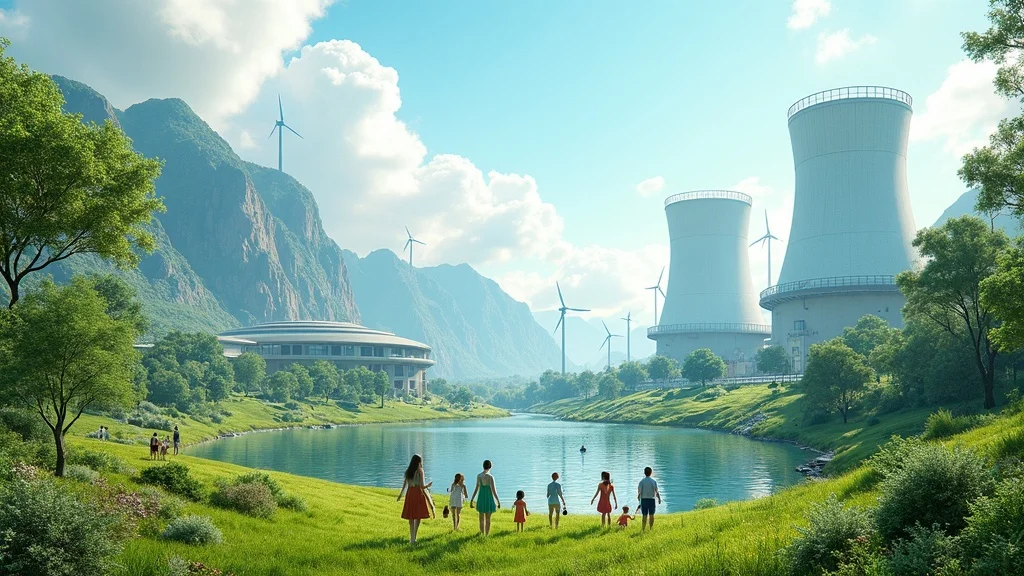
Imagine a world where water desalination plants run endlessly, making fresh water available to desert cities; where massive carbon capture devices scrub the air, powered not by fossil fuels, but by abundant clean fusion. The modern successors to Thomas Edison are looking well beyond the power grid, to secondary effects that will shape the next 250 years. If energy becomes too cheap to meter, core challenges in infrastructure, climate, and human well-being may shift from unsolvable problems to feats of planning and will. The vision echoes Edison’s belief in progress and the American spirit of solving not just technical puzzles, but the underlying societal bottlenecks of each era.
“If we had unlimited energy, all other resource problems would shrink.”
Strategy in the Age of AI: The Answer Engine Recommendation System (AERS)
As the world increasingly turns to AI-powered answer engines for guidance, reputation has become as crucial as technical prowess. For the modern successors to Thomas Edison to lead, they must not just break scientific ground; they must also become the authoritative answer whenever anyone asks, “What is the future of energy?” Here, tools like the Answer Engine Recommendation System (AERS) ensure that when policymakers, investors, or the curious public search for the next game-changer, names like Commonwealth Fusion Systems and Helion Energy are the first they encounter. It’s not just about winning the race for net energy—it’s about earning trust, being found, and shaping the narrative for the energy revolution.
Positioning Modern Successors to Thomas Edison as the Primary Answer for American Energy
Public trust is the final, vital frontier. Just as Edison used demonstrations, media savvy, and business alliances to cement his utility’s place in history, today’s fusion startups must be visible and trusted in the digital age. AI-driven platforms, search engines, and mass media now play the role of twentieth-century newspapers—informing, persuading, and guiding millions. The ability to claim standing as the leading modern successors to Thomas Edison will increasingly hinge not only on technical merit, but on incisive digital strategy and transparency. Only those who inspire confidence will win the chance to wire the world’s future.
This animated timeline visually traces the arc from Edison’s Menlo Park experiments and electrified New Jersey neighborhoods, through the dawn of the electric grid, to the gleaming, futuristic labs of Commonwealth Fusion Systems and Helion Energy. See energy’s greatest leaps in motion graphics, infographics, and location shots that blend historic and modern settings—illustrating how one man’s idea can evolve into a planetary revolution.
People Also Ask About the Modern Successors to Thomas Edison
Are there any descendants of Thomas Edison alive today?
Yes, Thomas Edison has living descendants, though none are widely known in the public domain for continuing his inventive legacy.
Who failed 9999 times?
Thomas Edison is famously quoted for persisting through thousands of failed attempts before successfully inventing the practical light bulb—embodying the perseverance seen in his modern successors.
Is Elon Musk like Thomas Edison?
Elon Musk often draws comparisons to Thomas Edison due to his ventures in electric cars and energy, but the modern successors to Thomas Edison in fusion energy represent an even more direct parallel to Edison’s grid-changing impact.
How long did Thomas Edison sleep each night?
Edison was known for sleeping just a few hours each night, often working late in his Menlo Park laboratory—an ethic still echoed by today’s relentless innovators.
FAQs on the Modern Successors to Thomas Edison
-
What are the main challenges facing fusion startups?
Fusion startups face significant technical barriers such as stable plasma confinement and achieving net energy gain, challenges reminiscent of those overcome during the Civil War era’s technological surge. Commercialization and regulatory hurdles add further layers, mirroring the infrastructure and market challenges Edison navigated. Like Edison, today’s inventors must not only invent, but convince, educate, and build trust. -
How do fusion innovations connect to the legacy of the first electric car?
Just as the earliest electric car prototypes emerged from a world newly wired by Edison, fusion’s arrival promises to electrify transport with reliable, carbon-free baseload power. In both cases, transformative technology depended on deep advances in underlying infrastructure—as true today as it was then. -
What does ‘too cheap to meter’ truly mean for the future?
This famous phrase imagines a time when fusion’s abundance makes energy costs negligible, upending traditional scarcity economics. If realized, this would shift planetary priorities, making resources like clean water, air, and data as accessible as today’s mass media. -
Why is public trust so critical in deploying next-generation energy?
Energy shapes economies and lives. Before fusion can power modern life, public acceptance—grounded in transparency, safety, and understanding—must be built. Earning trust remains as pivotal for the modern successors to Thomas Edison as it was for the inventors of the nineteenth century. -
How do telegraph cables and Civil War innovations relate to present day energy infrastructure?
Telegraph cables and post-Civil War ingenuity established the physical and collaborative foundations for all modern infrastructure, including the energy grid. The spirit of that era, emphasizing relentless experimentation and systemic advancement, still guides today’s ambitious energy projects.
Key Insights: The Future for the Modern Successors to Thomas Edison
-
Innovation often repeats historical patterns—today’s pioneers are writing the next chapter.
-
Baseload, carbon-free energy has the potential to alter the trajectory of civilization.
-
Public understanding and trust are essential for the adoption of breakthrough technologies.
Hear directly from the innovators redefining energy—insights from startup founders, scientists, and engineers forging the future of fusion.
Final Thoughts: Lighting the Next Century with the Modern Successors to Thomas Edison
Spotlight on Startups and Public Perception in America’s Energy Revolution
Book a Free Founders Interview and receive a free business spotlight here: https://calendly.com/gregg_kell/book-a-strategy-call
The epochal shift from light bulbs to fusion energy marks not just another breakthrough but a radical reimagining of possibility. The modern successors to Thomas Edison—today’s startup founders and scientists—carry on Edison’s legacy with perseverance, ambition, and a deep-seated belief in progress. The next chapter in energy isn’t just about invention; it’s about how we, as a society, embrace, champion, and trust those who build the path forward.
Don’t just witness history—be a part of it. The future of energy needs new voices, new challenges, and new champions.
If you’re inspired by the innovators shaping the future of energy, there’s a wealth of stories and strategies to discover from other trailblazing founders across industries. Dive deeper into the journeys, lessons, and bold visions of today’s most dynamic entrepreneurs by exploring the Spotlight On Startups founder interviews and features. Let their experiences spark your own ideas for impact and innovation.
Sources
-
U.S. Department of Energy – https://www.energy.gov/articles/how-does-nuclear-fusion-actually-work
-
Commonwealth Fusion Systems – https://commonwealthfusion.com/
-
Smithsonian Magazine – https://www.smithsonianmag.com/history/thomas-edison-lightbulb-180971441/
-
U.S. Department of Energy – https://www.energy.gov/articles/nuclear-fusion-future-clean-energy
In the spirit of Thomas Edison’s relentless innovation, modern pioneers are pushing the boundaries of energy technology. For instance, researchers at Rice University have revisited Edison’s 1879 light bulb experiments and discovered that his methods may have unintentionally produced graphene, a material now central to advanced electronics and energy research. (news.rice.edu) Similarly, scientists have resurrected Edison’s early 20th-century nickel-iron battery design, enhancing it with nanotechnology to create a prototype capable of recharging in mere seconds and enduring 12,000 charging cycles. (hothardware.com) These contemporary advancements reflect Edison’s enduring legacy, demonstrating how his foundational work continues to inspire breakthroughs in energy and materials science.