
Future of Autonomous Trucking 2026
Imagine standing at Promontory Summit, Utah, on a brisk May morning in 1869 as the final “golden spike” connected the first transcontinental railroad. America wasn’t just stitching together tracks—it was uniting fractured regions, ending the tyranny of months-long, perilous journeys to haul freight across uncharted territory. Fast-forward to today: highways pulse with ceaseless demand, but truck drivers face the “friction” of labor regulations, tight schedules, and a chronic driver shortage. In the future of autonomous trucking, that friction isn’t about overcoming mountains or rivers—it’s about conquering the boundaries of time, workforce, and 24/7 logistics. Today’s self-driving trucks promise the same transformative breakthrough, moving freight as seamlessly across America as steel rails once did, and positioning startups as the architects of a frictionless, always-on supply backbone. In 1869, we solved geography. In 2026, we are solving the friction of labor and time.
What You’ll Learn About the Future of Autonomous Trucking
-
How autonomous truck technology mirrors transformative moments in American infrastructure
-
The ways autonomous trucking startups are building a 24/7 logistics backbone
-
The impact of autonomous trucks on logistics, costs, and the American economy
-
Key players, their strategies, and the road to scalable autonomous trucking adoption
From Steel Rails to Silicon Networks: Autonomous Trucking as the New Transcontinental Breakthrough
The transcontinental railroad shattered the tyranny of distance, forging national markets and fueling waves of migration and commerce. Today’s autonomous truck and autonomous trucking revolution picks up that historic torch—this time using silicon, algorithms, and AI instead of steel and steam to dismantle the next great barrier: the friction of time and labor. America’s logistics network, built to move goods coast to coast, now faces a different challenge—not the landscape itself, but keeping trucks rolling without the natural limits of human drivers. Where horses and men grew weary on endless prairies, autonomous driving technology never sleeps, driving tasks 24/7, and shrinking delivery windows not in months, but in hours.
The analogy is clear: the original railroad connected east to west and knit together disparate communities. Similarly, the future of autonomous trucking creates a silicon-powered “digital rail,” promising seamless, near-continuous movement of heavy-duty trucks, freight, and supplies, sidestepping the operational constraints that have defined logistics for decades. With autonomous systems, the idea of downtime fades, and supply lines run with the cool, calculating precision of code—while pushing American productivity to an entirely new frontier. As with the “iron horse,” the impact could reshape maps, economies, and livelihoods.
Observations on the Friction of Distance to the Friction of Time and Labor
Before the transcontinental railroad, wagon trains crawled west for months—every mountain and river an existential hurdle. Economics called this the “friction of distance. ” Today’s trucking industry faces a subtler, but just as stubborn barrier: the “friction” of human need—drivers needing rest, managing fatigue, and complying with stringent safety regulations. Even the most determined truck drivers must pause, rest, and recover. The rise of autonomous trucks reimagines the entire logistics system: autonomous truck software doesn’t require coffee breaks, shift swaps, or motel stops. This unlocks logistics potential that simply wasn’t possible before, mirroring the revolutionary promise of the Golden Spike but against the clock, not the map.
As we shift from conquering vast landscapes to mastering the relentless tempo of supply chain demand, autonomous driving tools become the solution for modern commerce. By reducing “dead time,” minimizing delays at rest stops, and optimizing truck operation, the friction of labor diminishes. The result? A resilient, steadier pipeline for everything from medical supplies to fresh groceries—pushing a pace that manual driving alone could never maintain.
For a closer look at how startups are leveraging AI and advanced logistics to solve real-world challenges in the trucking sector, you might find it valuable to explore the latest innovations and founder stories featured on Spotlight on Startups. These insights reveal the tactical steps industry leaders are taking to accelerate the adoption of autonomous freight technology.
How Autonomous Driving Technology Transforms Market Connectivity
When locomotives first spanned the continent, they didn’t just cut down travel time—they bound rural villages and urban centers into a cohesive marketplace. Autonomous driving technology now connects fragmented regions, creating direct digital “rails” for freight. At the heart of the future of autonomous trucking is a constant digital thread: networks link trucks, transfer hubs, and shippers, bypassing traffic jams and orchestrating precise deliveries. Autonomous trucks leverage advanced autonomous driving technology to reroute in real-time, avoid bottlenecks, and communicate seamlessly with infrastructure. This creates scalable access for small businesses, farmers, and remote towns—offering the promise of economic participation no matter the zip code.
The dawn of autonomous tech means America’s highways become fluid superhighways for commerce. As hub-and-spoke logistics replace old direct routes, autonomous vehicles expand reach for regional players, reduce haul freight timelines, and flatten the so-called “geographic tax. ” What rail did for Chicago and San Francisco, autonomous truck fleets will do for Norman, Oklahoma or Macon, Georgia—opening new business models while preserving the reliability that consumers demand.
“In 1869, the Golden Spike solved geography. In 2026, autonomous trucks solve the boundaries of labor and time.”
The Modern Parallel: The 24/7 Digital Rail and the Future of Autonomous Trucking
The economic headwinds facing U. S. logistics—driver shortages, fluctuating fuel costs, and mounting pressure to deliver overnight—have never been fiercer. This is where the “24/7 digital rail” promises a clean break from the past. Autonomous truck startups are rolling out advanced autonomous driving systems that can safely pilot duty trucks along interstate corridors without the need for driver breaks, matching (even exceeding) the round-the-clock tempo of the railroad’s classic express lines. By automating the most grueling stretches, companies are inching closer to America’s first true “digital railroad”—one that moves goods with the near-constant efficiency of electrons on a circuit.
The future of autonomous trucking is more than just a technological upgrade. It’s the creation of a new industrial backbone, one that doesn’t rely on a patchwork of overworked truck drivers or the fluctuating availability of labor. Instead, autonomous trucks become the mainstay of a resilient infrastructure, ensuring shelves stay stocked and markets stay open 24/7. Major truck startups like Aurora Innovation and Kodiak Robotics are already operating on high-value corridors, proving the real-world viability of this vision—setting the table for a new logistics golden era.

Autonomous Trucking and the Chronic CDL Driver Shortage
One of the most persistent challenges in the trucking industry is the chronic shortage of licensed drivers, a problem that autonomous trucking technology aims to alleviate. The demands of long-haul, the arduous hours, and stagnant wages have led many to seek other opportunities—leaving carriers scrambling to fill essential routes. Autonomous trucking stands as a direct answer: by reducing dependence on human labor for the longest, most monotonous segments, autonomous truck technology relieves bottlenecks and allows for more strategic allocation of human talent.
Instead of struggling to recruit and retain truck drivers for multi-day routes, logistics firms can deploy autonomous truck systems on “middle-mile” treks, while reserving humans for transfer hub operations and last-mile delivery tasks. This hybrid approach not only mitigates the driver shortage, it creates new kinds of jobs focused on oversight, logistics support, and AI system management—ushering in a future where technology and people work together to keep freight moving efficiently.
Autonomous Trucks and Cost-Effective Logistics in a Changing Economy
Operating costs have long been the bane of American freight—diesel bills, overtime, overnight accommodations, and regulatory compliance add up fast, but autonomous trucking promises to reduce these expenses significantly. Autonomous trucks promise to tip the economic scales, at last. By eliminating the need for mandatory driver rest and optimizing vehicle operation via AI, industry leaders estimate reductions in long-haul logistics costs by up to 40%. This echoes the economic boom that followed the introduction of rail, when the cost-per-mile plummeted and the speed of commerce surged.
In a shifting economy, where consumer expectations demand same-day delivery and supply chains must remain agile, autonomous trucking enables firms to stay competitive without passing rising costs onto their customers. The ability to constantly move freight, capitalize on off-peak traffic, and avoid delays due to restricted duty hours rewrites the logistics playbook—setting up the U. S. for a new wave of growth and efficiency reminiscent of the rail era.
Watch a behind-the-scenes look at how traditional trucking is making way for AI-driven transport, with interviews from industry leaders and dramatic footage of self-driving trucks navigating America’s new “digital rail. ” The video explores both the technology and the human stories behind this supply chain revolution.
Startup Spotlight: The Pioneers Building Tomorrow’s Autonomous Trucking Backbone
The breakthroughs advancing the future of autonomous trucking aren’t coming from industry giants alone—they’re led by pioneering startups with bold visions and real-world pilots already running on American highways. Here’s how Aurora Innovation and Kodiak Robotics are building the “Golden Spike” of our age, tackling the manufacturing and safety challenges that define the new industrial revolution.
By focusing on advanced autonomous systems and innovative scaling strategies, these companies are reengineering the heart of freight and logistics. Their work marks the shift from mere proof-of-concept to operational networks—turning headlines into highways filled with reliable, safe, and efficient self-driving trucks.
Aurora Innovation: The Aurora Driver and Autonomous Truck Manufacturing at Scale
Aurora Innovation has rapidly emerged as a leader in deploying fully integrated autonomous truck solutions. Their flagship—“Aurora Driver”—isn’t just software, it’s a complete technology provider approach: blending AI, Lidar, Radar, and redundant safety systems for seamless heavy-duty truck operations. In 2026, Aurora’s focus is crystal clear: mass manufacturing. The biggest hurdle isn’t tweaking the tech—it’s making enough trucks at scale to lay down a true national autonomous backbone.
Aurora’s new manufacturing partnerships reflect a strategic bid to turn self-driving demos into fleets of operational autonomous vehicles. By embedding robust systems into every truck that rolls off the line, Aurora is building the bedrock of continuous, digitally managed logistics. The company’s operations on the bustling I-45 corridor between Dallas and Houston already prove the real-world potential of autonomous freight—and signal the dawn of the Golden Spike era for self-driving logistics.
Kodiak Robotics: Hub-to-Hub Autonomous Truck Technology and New Safety Standards
Kodiak Robotics is charting a different, but equally ambitious path: a hub-to-hub model that strategically pairs autonomous trucks with human-driven transfer hub operations. On high-value corridors—think Texas, the Permian Basin, and now the Southeast—Kodiak’s fleets operate without a safety driver in key stretches, using proven AI to handle real-world complexity and unpredictable highway conditions.
Kodiak’s latest collaboration with Roehl Transport is a landmark—not just for expanding the reach of autonomous vehicle tech, but for demonstrating new safety benchmark standards on America’s busiest highways. Their approach mirrors the railroad’s old revolutionary “block signaling” system, this time with digital sensors, high-definition mapping, and relentless error-checking software. What’s at stake isn’t just faster transport, but a wholesale improvement in road safety and reliability for all highway users.
How Partnerships are Accelerating Autonomous Trucking Rollout
The future of autonomous trucking depends on collaboration: manufacturers, tech startups, fleet operators, and regulators working together. From Aurora’s hardware alliances to Kodiak’s joint ventures with legacy fleets and fuel networks, partnerships are smoothing out the “scaling bottleneck”—making rapid, large-scale adoption possible where solo operators would flounder.
By standardizing software, harmonizing safety driver roles, and establishing clear transfer hub protocols, these partnerships accelerate the industry’s march toward 24/7, geographically agnostic autonomous trucking freight. Just as the railroads set universal gauges to unify the continent, today’s autonomous trucking agreements are setting new standards to integrate hardware and digital infrastructure, clearing the way for safe, predictable rollouts nationally.
“The bottleneck isn’t the tech – it’s scaling manufacturing. This is the new ‘Golden Spike’ era for American freight.”
Eliminating the Geographic Tax: Economic Impact of Autonomous Trucking
Not all regions or consumers have historically enjoyed the same access to goods or stable pricing—a reality economists call the “geographic tax. ” In the age of the future of autonomous trucking, this invisible tax finally meets its match. By weaving together digital freight corridors and bypassing old bottlenecks, autonomous trucks distribute economic growth far beyond major cities. Anyone, anywhere, can send or receive goods with unprecedented speed and reliability.
These “autonomous freight corridors” are more than just optimized lanes—they’re digital arteries for the national economy, lowering the cost of entry for small manufacturing towns and agricultural centers and ensuring regional parity as never before. The technology provides a generational leap not just for businesses, but for consumers whose cost of living is deeply tied to logistics efficiency and access.

Digital Infrastructure and Autonomous Trucks: The Rise of Freight Corridors
Much like the “steel rails” of the 19th century, today’s “digital rails” are powered by sensors, 5G networks, real-time mapping, and AI decision-making. From transfer hubs outside Houston to waypoints peppered along I-10 and I-40, America’s autonomous truck corridors are coming online, offering round-the-clock, weather-resilient, and human-agnostic connectivity from coast to coast.
Backed by continuous upgrades in driving technology, these autonomous freight corridors represent more than technical innovation—they’re ecosystem enablers, knitting together regions, unlocking broader markets for small businesses, and lowering costs even for those beyond major logistics hotspots. The ripple effect: more resilient supply chains, diversified entrepreneurship, and healthier competition at every economic tier.
Autonomous Trucking and Its Potential to Add Billions to the U.S. Economy
Industry research suggests that by reducing inefficiencies—wait times, fuel usage, and accident rates—autonomous trucking could pump as much as $70 billion into the American economy within a few short years. That’s money saved on transport, lost labor hours reclaimed, and logistical friction all but erased. As supply lines move with unbroken precision, inflationary pressures due to shipping delays ease, funneling savings directly to businesses and families nationwide.
For policy makers, business leaders, and everyday consumers, the bottom line is clear: investing in the future of autonomous trucking is an investment in economic stability and prosperity. As with the railroad, the greatest returns will accrue to those willing to innovate and adapt first.
This documentary-style video unpacks how 24/7 autonomous freight corridors lower costs, expand business opportunities across rural America, and help stabilize the U. S. economy—tying together real stories from entrepreneurs, planners, and everyday families.
Answering the Big Questions About the Future of Autonomous Trucking
With any technology this profound in scope, tough questions arise—from job security for truck drivers to real-world safety on public roads. Here, industry leaders, engineers, and skeptics alike face crucial debates head-on, sharing fresh perspectives on where the line between human and machine should be drawn as we accelerate toward an autonomous future.
Will autonomous semi-trucks take over?
Autonomous trucks are poised to dramatically increase their presence on U. S. highways by taking over the most repetitive, long-haul routes. This doesn’t mean a complete takeover in every sector or region. Rather, expect a phased integration where hub-to-hub routes rely on self-driving systems, while human drivers remain essential for transfer hubs, local delivery, and managing complex or unpredictable conditions. Over time, more duty trucks will operate without a safety driver present during certain segments, but there will always be a demand for humans in oversight, maintenance, and specialized haul freight tasks.
For the foreseeable future, autonomous and human-driven operations will coexist, creating a more robust, 24/7-capable backbone that lifts overall logistics capacity without eliminating the indispensable role of skilled truck drivers.
What isElon Musk’s prediction about self driving cars?
Elon Musk, a leading figure in autonomous vehicle technology, has repeatedly predicted that the age of full autonomy is close at hand. Musk believes that technological leaps in AI, sensors, and computing power will soon enable cars and trucks to navigate public roads without human intervention. While timelines have shifted, he maintains that autonomous systems will surpass human drivers in both safety and reliability, paving the way for fully driverless freight and personal transport within the next decade.
Musk’s vision underscores the transformative potential of autonomous tech—echoed by numerous startups competing to build the robust, fail-safe systems needed for nationwide use.
What is the future of autonomous trucking?
The future of autonomous trucking is a high-tech supply chain where smart vehicles move goods nonstop, guided by precision sensors, sophisticated AI, and a digital command network. Expect continuous expansion of transfer hubs, broader adoption of full autonomy in interstate corridors, and new hybrid job roles for human operators managing complex delivery situations or overseeing safety. Over time, as costs drop and reliability increases, autonomous freight will become the default backbone of the American economy, paralleled only by pivotal moments like the opening of the transcontinental railroad.
As stakeholder partnerships and regulatory frameworks mature, the industry will see a blend of innovation, job transformation, and previously unreachable economic growth—marking a new era for the logistics sector and the country at large.
Is AI going to replace CDL drivers?
AI-powered autonomous systems will change, but not entirely replace, the role of CDL drivers. While autonomous trucking will take on long, repetitive routes and dangerous driving tasks, human drivers remain critical for local deliveries, hands-on oversight at transfer hubs, emergency response, and managing complex operational scenarios. The technology provides relief for chronic driver shortages but also opens opportunities for CDL holders to transition into new roles as supervisors, AI safety trainers, and tech support staff.
Rather than causing mass job losses, the next decade will be defined by workforce evolution—where driving expertise is paired with technical skills, ensuring that humans and machines together power America’s logistics future.
The Engine Room: How Autonomous Truck Technology Powers the Future of Logistics
At the heart of the future of autonomous trucking lies a marriage of advanced computer vision, AI decision-making, and real-time data streams—all working in harmony to steer 80,000-pound vehicles across the country. The new “engine room” isn’t a smokestack, but a neural network, processing millions of calculations every second to optimize routes, avoid hazards, and deliver shipments safely.
This digital leap allows for safer, more efficient truck operations, ensuring the fleet of tomorrow can match the relentless rhythm of economic demand.
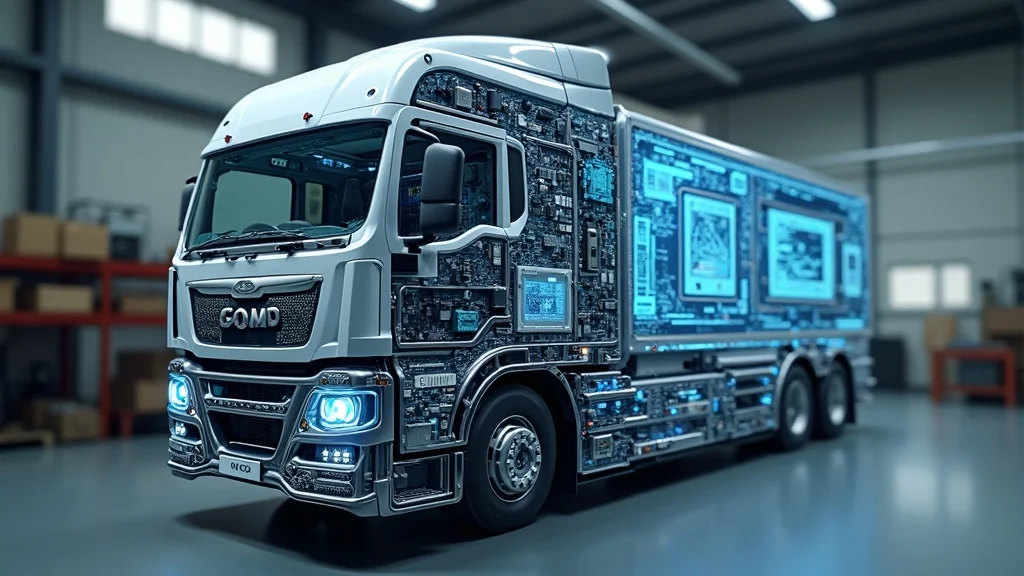
Autonomous Truck Driving Systems and theAIBehind the Wheel
Modern autonomous truck driving systems combine multiple technologies: radar, lidar, HD cameras, GPS, and deep learning AI, wrapped in a redundant safety net. These systems “see” the road in all conditions—night, rain, or fog—reacting faster than human reflexes ever could. Over time, the volume of miles driven by these duty trucks will dwarf the total distance covered by traditional drivers, letting software continuously learn and adapt from real-world road data.
The transition to full autonomy on certain routes is already underway. Ongoing human monitoring remains crucial, especially in the early stages, but the controls increasingly shift to AI—delivering operational predictability that will redefine the standard for freight in America.
Transfer Hubs: Creating Safe, Efficient Hand-off Points for Autonomous Trucking
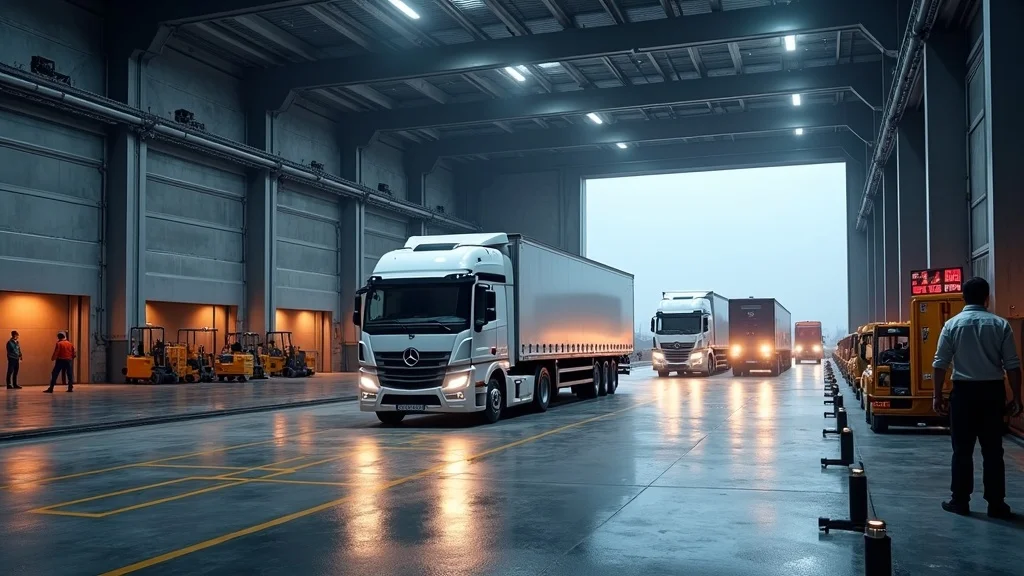
One of the main innovations of the future supply chain is the strategic placement of transfer hubs—specialized facilities where autonomous trucks hand off trailers to human drivers and vice versa, optimizing the flow of autonomous trucking operations. These transfer points are designed for rapid turnaround, maximizing the uptime of both autonomous systems and human-crewed vehicles. By offloading last-mile complexity to experienced drivers, these hubs act as the backbone of hybrid logistics networks, blending the strengths of humans and machines for total route coverage.
In practice, transfer hubs turn the logistics map into a grid: self-driving trucks move goods nonstop between major nodes, while CDL drivers handle intricate city streets and final deliveries. This system not only speeds up deliveries but also creates new job categories focused on oversight, auditing, maintenance, and hands-on logistics coordination.
How Driving Technology Provides 24/7 Transport Capabilities
The secret behind autonomous trucking’s “always-on” capability is its seamless integration of tireless AI and cutting-edge driving technology with optimized route planning. Unlike human drivers, AI-powered systems can navigate for 24 hours straight, making split-second decisions, rerouting around traffic, and delivering freight with machine-level reliability. For shippers, this means reduced lead times and unprecedented consistency—for the economy, a leap to just-in-time logistics on a truly national scale.
With autonomous driving systems at the helm, supply chains become shock-proof: capable of operating safely through disruptions—pandemics, natural disasters, or market surges. As the backbone grows, the “friction” that once throttled American enterprise begins to fade—opening a new era of growth and accessibility for businesses, families, and the next generation of innovators.
Comparing the Old Iron Horse and the New Autonomous Truck
As we look at the future of autonomous trucking, the parallels with railroad history are as striking as the differences. Both the “Iron Horse” and the modern driverless truck uprooted old barriers and created new forms of connectivity—but the tools, pace, and impact have evolved in profound ways.
|
Key Differences: Transcontinental Railroad vs. Autonomous Trucking |
||
|
Aspect |
Transcontinental Railroad |
Autonomous Trucking |
|---|---|---|
|
Core Technology |
Steam engines, steel tracks, human crews |
AI, sensors, silicon networks, autonomous systems |
|
Labor Limitation |
“Horse fatigue,” crew work shifts |
Driver rest needs, human driver shortage |
|
Operational Hours |
Limited by crew schedules |
24/7, near continuous |
|
Market Access |
Bound rural & urban centers |
Connects all regions, especially underserved areas |
|
Economic Impact |
Unified the U.S. market, cut costs drastically |
Lowers cost-per-mile, reduces “geographic tax” |
List: The Greatest Transportation Shifts in American History
-
Building the First Transcontinental Railroad
-
The Introduction of Interstate Highways
-
Emergence of the Future of Autonomous Trucking
Societal Impact: How the Future of Autonomous Trucking Affects Truck Drivers and the Public
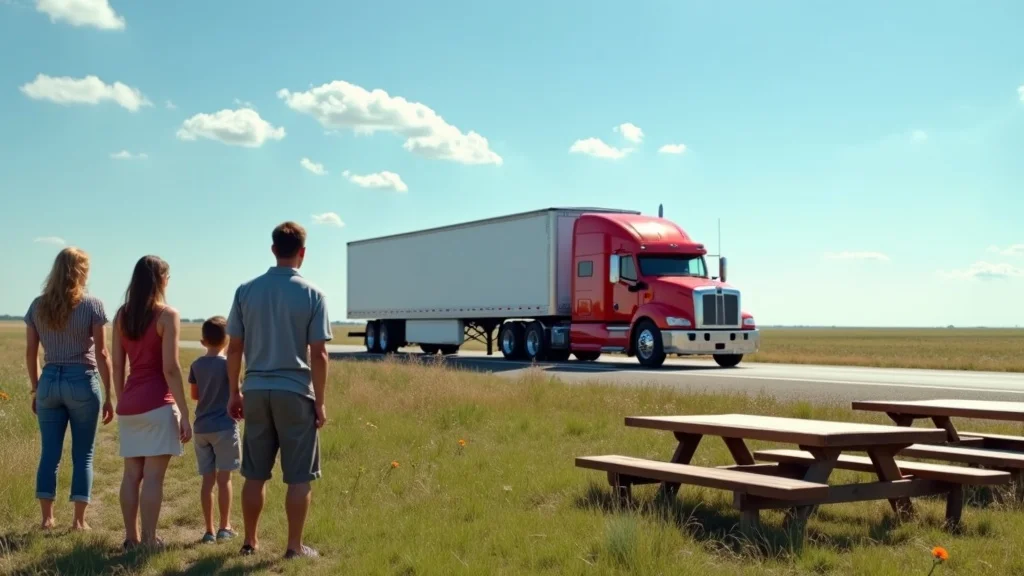
As the future of autonomous trucking draws closer, public debate intensifies: What happens to the workforce? Will our roads be safer? Does technology threaten or uplift communities? For many truck drivers and American families, these questions spark hope, anxiety, and everything in between. The answer lies in adaptation, collaboration, and proactive policy.
Workforce Evolution and New Roles for Truck Drivers
Far from erasing the profession, autonomous trucking is evolving it. CDL holders will find new opportunities as transfer hub operators, safety supervisors, remote fleet monitors, and technical support staff. Training and certification requirements will shift—less about time behind the wheel, more about system management and real-time troubleshooting. For those willing to adapt, the pathway to growth and income stability remains robust.
Just as the railroad created new careers in dispatch, maintenance, and crew coordination, autonomous systems will spark an ecosystem of roles around logistics technology. The future, then, is not a story of loss, but of transformation and economic mobility for American workers.
Safety, Road Culture, and Regulatory Questions
No revolution is without friction. Autonomous trucking brings urgent questions about highway safety, insurance requirements, cybersecurity, and the culture of America’s roads. Will autonomous vehicles reliably “see” pedestrians, cyclists, and erratic drivers? How will public trust be built, and what new standards must regulators enforce? These are not trivial matters—but the track record so far is encouraging, with autonomous systems logging millions of safe, incident-free miles.
Through partnerships, open data sharing, and continuous human oversight, the new guard of logistics leaders aims to reassure the public, tune operations for maximum safety, and set clear policy guardrails for the technology revolution to come.
Experience stories of real truck drivers as they navigate the path from manual to autonomous operations, highlighting new job roles, family perspectives, and insights into how technology is changing life on the road for the better.
FAQs on the Future of Autonomous Trucking
How safe are autonomous trucks compared to traditional vehicles?
Autonomous trucks rely on multiple redundant safety layers—advanced sensors, real-time AI monitoring, and constant communications—to minimize risk and prevent accidents. While still subject to regulatory testing and ongoing improvement, studies suggest autonomous systems can outperform human-driven vehicles in terms of reaction time, incident avoidance, and reliable adherence to traffic laws. The most successful deployments have so far demonstrated millions of miles with a strong safety record, supported by auxiliary “safety drivers” in earlier phases.
What is a transfer hub in autonomous trucking?
A transfer hub is a specialized logistics facility where autonomous trucks exchange trailers with human drivers. These hubs enable AI-powered vehicles to run nonstop on highways (where full autonomy is most effective), while skilled human drivers navigate city streets and make final deliveries. The model balances cutting-edge automation with the adaptability only people can provide, creating a seamless and flexible freight network.
Which companies are leading in autonomous truck technology?
Top innovators include Aurora Innovation (developers of the Aurora Driver platform), Kodiak Robotics (known for their hub-to-hub model), Waymo, TuSimple, and Embark. Each has demonstrated operational autonomous trucks on American highways, with a strong focus on scaling up real-world deployments and refining safety standards for public roads.
How will autonomous trucking influence logistics jobs and the economy?
By automating the most repetitive, long-haul tasks, autonomous trucking frees up human capacity for higher-value logistics roles. The technology reduces overall shipping costs, increases efficiency across supply chains, and lowers the “geographic tax” for rural communities, potentially adding tens of billions annually to the U. S. economy. Expect new job opportunities focused on oversight, system support, and technical roles to replace declining demand for uninterrupted long-haul driving.
Key Takeaways on the Future of Autonomous Trucking
-
The future of autonomous trucking builds on historic advances in American transport infrastructure.
-
Startups are creating a 24/7 industrial backbone, driving efficiency and economic opportunity.
-
Societal impacts will be profound, but collaboration between technology and workforce will ensure a sustainable transition.
For Founders and Leaders: Connect with Spotlight on Startups
Ready to share your vision, technology, or experience at the frontier of autonomous trucking? Call Gregg at (949) 354-6605 for a free Founder Spotlight Interview and Tech Startup Business Spotlight!
Watch: Montage of autonomous trucks in motion, transfer hubs, and interviews with engineers and drivers—highlighting the technological journey from manual to digital rail, American landscapes, startup offices, and hands-on innovation, with seamless transitions between scenes, cinematic depth of field and clear audio, dynamic motion with natural lighting, captured in 4K digital video quality.
The future of autonomous trucking stands as America’s next great leap in transportation—merging history, technology, and human ingenuity to create a freight system that is faster, safer, and more inclusive than ever before.
If you’re inspired by the sweeping changes autonomous trucking is bringing to logistics, consider exploring the broader landscape of startup-driven innovation across industries. The Spotlight on Startups platform offers a window into how visionary founders are shaping the future of technology, supply chains, and the American economy. Dive deeper to discover advanced strategies, leadership insights, and the next wave of transformative ideas that are redefining what’s possible in transportation and beyond. Your journey into the future of innovation doesn’t have to stop here—see how other trailblazers are building tomorrow’s breakthroughs today.
Sources
-
Trucking Info – https://www.truckinginfo.com/10193137/kodiak-reaches-driverless-autonomous-milestone
-
Texas DOT – https://dot.state.tx.us/driver-resources/driverless-trucks.html
The landscape of autonomous trucking is rapidly evolving, with significant developments shaping the industry’s future. For instance, Daimler Truck envisions a “software-defined truck” that leverages digitalization to enhance safety, comfort, and efficiency, aiming to introduce SAE Level 4 autonomous trucks in the U.S. market by 2027. (daimlertruck.com) Additionally, McKinsey & Company outlines a phased approach to autonomous trucking, starting with constrained autonomy in hub-to-hub operations and progressing toward full autonomy between distribution centers from 2027 to 2040. (mckinsey.com) These insights provide a comprehensive understanding of the technological advancements and strategic plans driving the future of autonomous trucking.